



Introduction — a quick scene, some numbers, and a question
I once walked into a small PCB shop where the air tasted faintly of burnt flux — the kind of smell that tells you something important is happening, yet also that the team is silently putting up with risk. In that moment I thought about fume extraction for electronics and industrial applications: how many workshops accept those smells as part of the job, and how many workers carry unseen exposure every day? Recent studies show that soldering and board assembly can release fine particulate matter and volatile organic compounds (VOCs) at levels that exceed safe limits — sometimes by 2–3 times in poorly ventilated rooms. (Yes, I checked the numbers.) So how do we move from tolerating fumes to controlling them in a way that actually fits shop workflows and budgets? This piece traces that path — practical, honest, and focused on choices that matter. Read on for a clear comparison and a few real takeaways.
Part 1 — Why common setups fail during reflow soldering
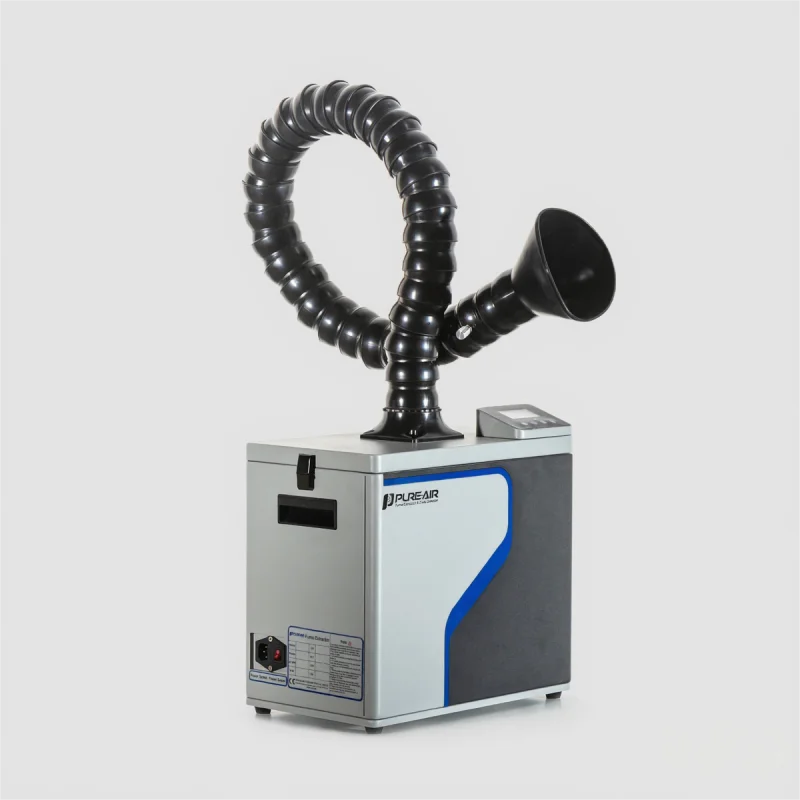
When I dig into shop practices, one recurring problem shows up around reflow soldering: teams rely on basic room fans or local ducting that just moves the smoke around. Technically, reflow soldering produces flux vapors and fine particulates that need capture at source. The old fixes — larger rooms, open windows, or simple ceiling vents — reduce smell but not exposure. I see it a lot: managers assume dilution equals safety. It doesn’t. Particulate matter and VOCs can linger and re-enter breathing zones, especially when airflow patterns are chaotic. Look, it’s simpler than you think: capture close to the board, filter effectively, and control airflow direction.
On the equipment side, many shops install underpowered fume extractors or units with poor filtration. HEPA filters catch particles but miss gaseous compounds unless paired with activated carbon or chemisorption stages. Then there’s maintenance — clogged filters and ignored flow sensors render a system ineffective, and nobody notices until a complaint or a test. In short, traditional solutions often get one thing right and miss two others: source capture, appropriate filtration media, and ongoing verification. I’ve watched good money go into models that felt solid in the brochure but delivered weak results in the workspace. My advice? Test at the bench, not on paper.
How bad can it really get?
If you want a quick metric: time-weighted averages for VOCs during reflow can spike during the peak heat phase and then settle slowly. Without source capture, those peaks translate to cumulative exposure for operators doing repeated runs. I’ve seen single-operator lines hit exceedances multiple times a week. That’s not acceptable, and it’s fixable.
Part 2 — New technology principles and what they mean for next-gen fume control
Now let’s look forward. Engineers are designing systems that treat fume control like a process problem — not just an HVAC add-on. At the core of better setups for reflow soldering are three principles: targeted source capture, multi-stage filtration, and smart monitoring. Targeted capture uses small hoods or nozzles near the board so airflow rates can be low but effective. Multi-stage filtration pairs particulate removal (HEPA) with gas-phase media (activated carbon, or tailored chemisorbents) to handle both solder flux aerosols and VOCs. Smart monitoring adds sensors for airflow, VOCs, and particulate counts so you can see performance in real time — and not just when someone files a complaint.
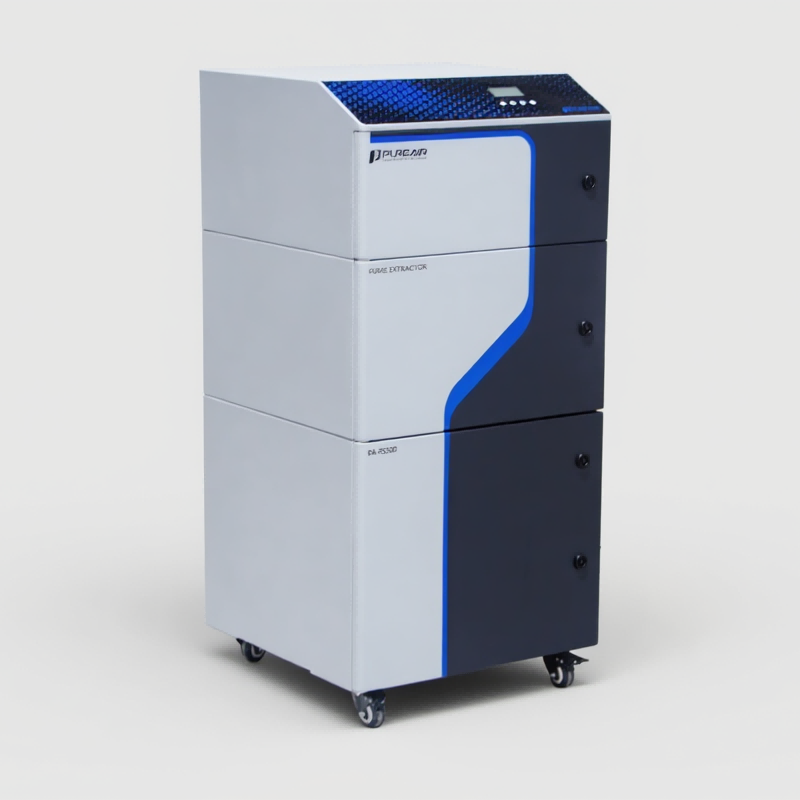
I want to be candid: new tech isn’t always plug-and-play. Integrating sensors, setting alarms, and training operators takes work, and there are trade-offs — cost, footprint, and maintenance routines. But when teams commit, I’ve seen exposure drop by half or more and uptime improve because systems are maintained before failure. Two practical terms you should know: capture velocity (how fast air must move at the source) and face velocity (how the hood interacts with the surrounding room). When those are right, the fume extractor does its job without creating draughts that annoy operators. — funny how that works, right?
Real-world Impact
Think of a small production line that upgraded its benches with integrated nozzles, added carbon/HEPA stacks, and put dashboards on the wall. Not dramatic — but measurable: fewer complaints, lower airborne VOC readings, and a smoother workflow. I helped a shop map their exposure before and after, and the difference was striking. The takeaway: focus on the full chain — capture, filter, monitor, and maintain. Don’t skip any step.
Closing — how to choose a solution (three practical metrics)
We’ve covered where shops commonly fail, and what modern principles fix. I’ll finish with three concrete metrics I use when evaluating systems: 1) Measured capture efficiency at the source (percent removed during peak reflow), 2) Filter media suite and replacement interval (does it include gas-phase media for VOCs?), and 3) Real-time monitoring and alarm thresholds (can you see a drop in flow before it becomes a hazard?). Use those, and you’ll move beyond vendor claims to actual workplace safety. Also — and this matters — factor in operator comfort: systems that are too noisy or that create drafts get disabled. I say this from experience; I’ve seen great hardware sidelined by poor human factors.
In short, be practical, test in your environment, and demand verifiable data. If you want a partner that speaks engineering and shop-floor language, check providers that back measurements with service. I prefer solutions that make maintenance easy and keep logs transparent. That’s how real change happens — steady, measurable, and people-focused. For equipment and deeper product details, see PURE-AIR.

