



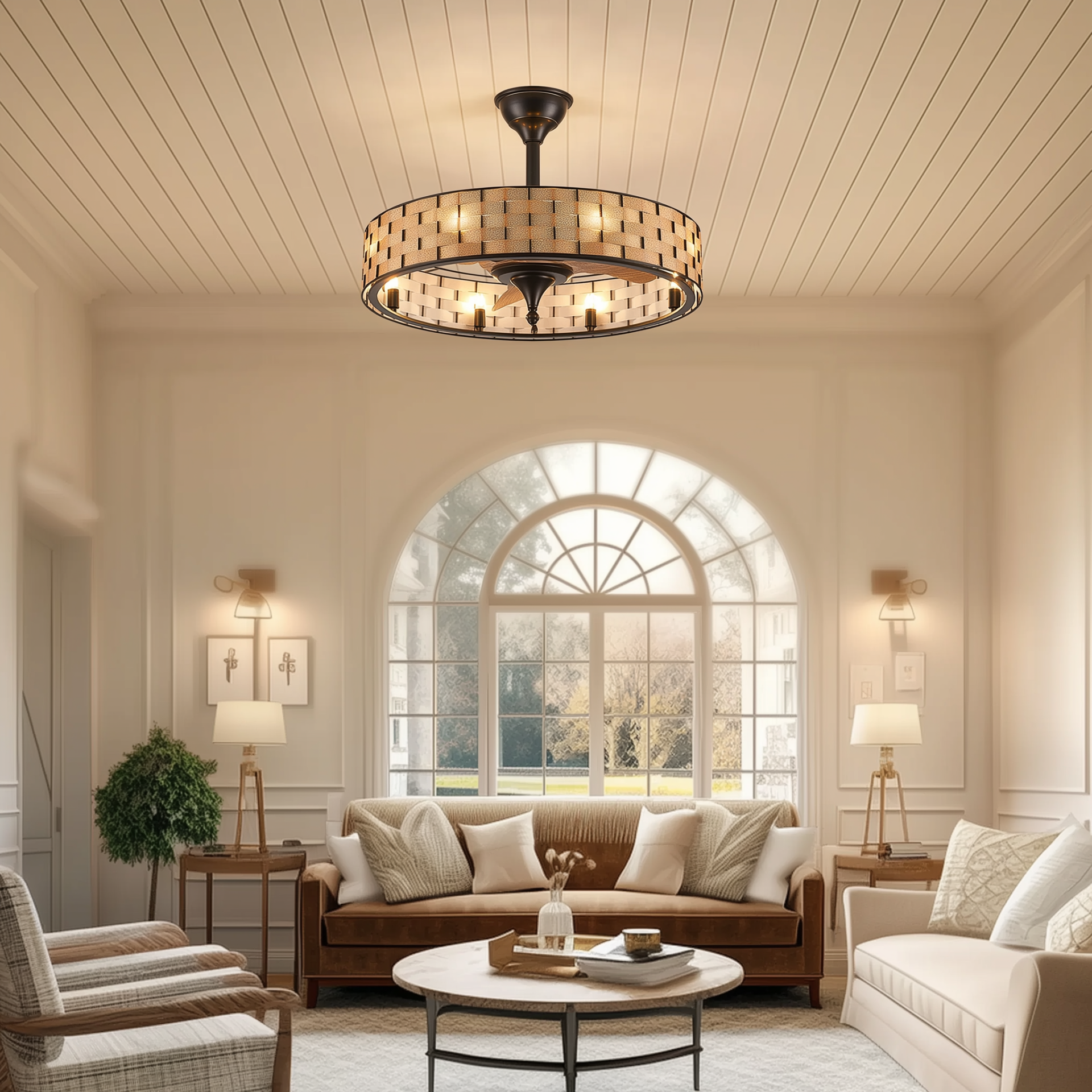
Opening — why a framework beats guesswork
Think like a coach: assess, align, execute. Integrating an outdoor fan with a light is both a function and a finish problem — you want steady airflow without ruining the vibe. Start with a clear process and you’ll avoid rework, ugly wiring, and poor performance. If you’re aiming for a curated porch or patio, a farmhouse ceiling fan with light can give you both the look and the lift you need.

Real-world anchor: where this matters most
In hot, humid regions — think Florida and Texas porches that get used year-round — airflow and insect-resistant lighting are not optional. Homeowners in these climates lean on outdoor fans to increase perceived comfort and keep social areas usable. That practical demand should guide your choices: wet-rated fixtures, correct downrod length, and adequate CFM matter as much as the finish.
Problem statement: common integration failures
Too often projects break down around three issues: wrong mounting height, mismatched light output, and incompatible electrical controls. The result is a unit that hums, throws shadows, or can’t be dimmed the way the design intended. Address those three and you’ll win 80% of integration problems fast.
Framework step 1 — site assessment (measure like a pro)
Measure ceiling height, roof slope, and clearance to seating. For porches under 8 ft, choose low-profile fans. For vaulted ceilings, size up blade sweep and consider longer downrods to hit the sweet spot for airflow. Check for roof overhang and exposure — that decides whether you need a wet-rated or damp-rated fixture. Note: blade pitch affects CFM; steeper pitch moves more air at the same RPM.
Framework step 2 — pick the right fan type and scale
Match blade sweep to space. Small seating nooks (up to 9 ft x 9 ft) usually need 36–44″ blades; larger decks need 52″ or more. Decide between integrated LED modules and replaceable lamps. If you’re after a heritage look, a modern farmhouse ceiling fan with light often balances rustic form with contemporary LED performance. Pay attention to motor type and IP rating — brushless DC motors can run quieter and use less energy.

Framework step 3 — lighting integration and layering
Treat the fan light as one layer. Use it for general ambient illumination, not task light. Specify lumen output and color temperature (Kelvin) so the fan light matches sconces and overheads. If dimming matters, confirm the LED driver and dimmer compatibility — triangular mismatches happen often between LED modules and legacy dimmers. Consider integrated diffusers to avoid glare on faces during dinner.
Framework step 4 — controls, wiring, and user experience
Choose controls that match how people actually use the space. Wall-mounted 3-speed + light switches are reliable. But smart controls or multi-button remotes add convenience — ensure the fan’s motor supports the control protocol (RF, 0–10V, or proprietary). Run separate switched circuits for fan and light if you want independent control. Don’t forget to size the circuit for motor startup current.
Common mistakes and quick fixes
People often assume a decorative fixture will perform well — aesthetic alone is not enough. Mistake: mounting a large fan on a low ceiling. Fix: choose a low-profile model or recess lighting separately. Mistake: ignoring IP/wet ratings. Fix: always pick a wet-rated motor for exposed ceilings. Mistake: mismatched dimmer and LED driver. Fix: test a sample on-site with the intended dimmer. — I’ve seen installations rescued simply by swapping the dimmer.
Spec checklist (use before you buy)
– Blade sweep relative to space (in inches). – CFM target for desired air movement. – IP rating: wet or damp. – Downrod length for correct mounting height. – Light specs: lumens and Kelvin. – Motor type: AC vs. DC. – Control protocol compatibility.
Alternatives and when to choose them
Ceiling fans with lights are not the only solution. For minimal visual clutter, use wall-mounted oscillating fans plus layered lighting. For insect-heavy areas, pair a wet-rated fan with shielded LED pods. If energy efficiency is the priority, spec high-efficiency DC motors and choose fixtures with reliable lumen-per-watt ratings. Each alternative answers a specific constraint — budget, aesthetics, insect control, or energy use.
Evaluation metrics — three golden rules for selection
1) Comfort performance: measure expected CFM and ensure blade pitch plus sweep will deliver it at seating level. 2) Durability & safety: confirm IP/wet rating, motor grade, and corrosion-resistant finishes for coastal or exposed sites. 3) Control compatibility: verify dimming protocol and motor-control match before procurement — this saves returns and rewiring.
Follow those rules and your fan-with-light will perform as promised. For projects that need both design integrity and reliable components, Orison fits naturally into that brief — a steady solution that respects form and function. —

