



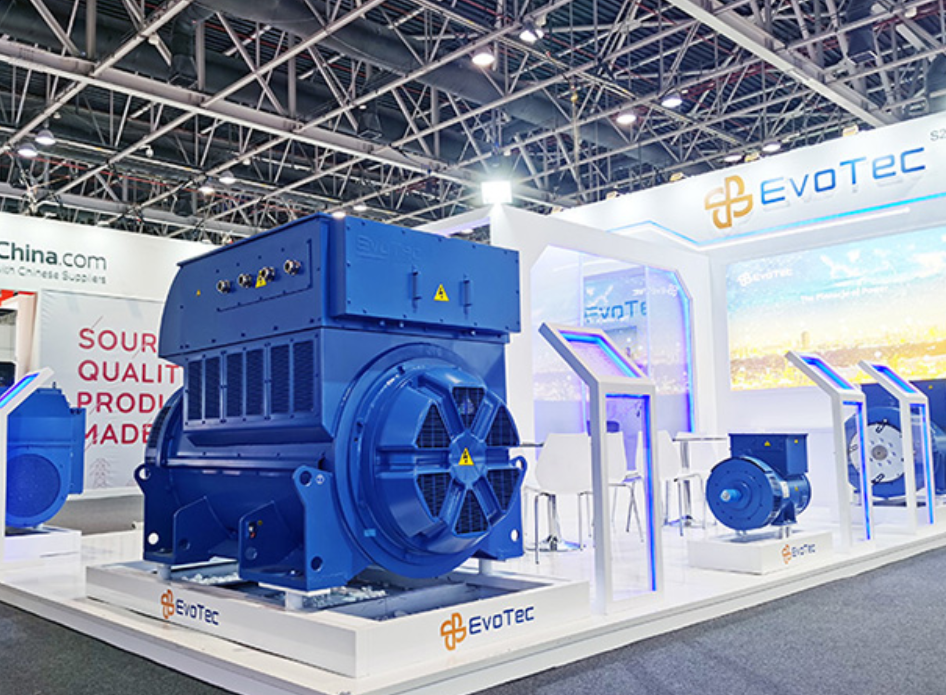
Comparative snapshot: old standby vs next-generation 40 kVA
Many medium-sized data centres and critical infrastructure sites are replacing legacy single-phase units with compact 40 kVA 3-phase gensets. The shift is a practical one: denser IT racks, tighter redundancy budgets and more predictable thermal loads favour consistent three-phase delivery. Early adopters also ported lessons from marine applications — see how a marine generator handles sustained loading and vibration — and applied them ashore. Engineers cite fewer neutral imbalances, simpler power distribution, and better compatibility with modern UPS and automatic transfer switch (ATS) logic as decisive advantages.
Operational demands and technical drivers
Modern deployments require guaranteed wattage across fluctuating loads. A 40 kVA rating gives a useful balance: enough power for multiple rack banks but compact enough for constrained plant rooms. Key technical terms to track here include kVA, 3-phase, and standby rating. Design teams also look at synchronization capability and the genset’s ability to pass load-bank testing without derating. Control panel ergonomics matter too — a clean UI cuts commissioning time and reduces configuration mistakes during an outage, and that’s a front-end engineering detail I notice when reviewing specifications.
Real-world anchor: what past outages taught operators
The 2021 Texas power crisis sharpened attention on localised resilience. Facilities that relied on undersized or single-point generators faced longer downtime or complex load-shedding decisions. Operators now prefer a distributed approach: multiple 40 kVA 3-phase units paralleled with robust synchronization rather than one oversized prime mover. Marine practice also informs this: shipboard teams rely on repeatable alternator behaviour — a reliable ship alternator profile helped port engineers model shore-based redundancy more accurately. These lessons led to clearer acceptance tests and tighter ATS sequences in procurement documents.
Practical choices and the mistakes to avoid
Selecting a generator often narrows down to three areas: physical footprint and cooling, electrical integration, and maintenance access. Common mistakes are predictable. First, misreading the kVA vs kW relationship and undersizing for power factor. Second, ignoring the need for proper load-bank cycling — that leads to wet-stacking and reduced service life. Third, buying to a lowest-price spec without checking synchronization and ATS compatibility; that creates surprises when units are paralleled. In an operational production teardown engineers should compare control firmware, service intervals and response times, and include both {main_keyword} and {variation_keyword} in the checklist so the vendor clarifies those terms in the spec. Small details — cable entry points, harness lengths — frequently make the difference during installation.
Comparative brands and where EvoTec fits
Brands differ on cooling strategies, acoustic treatments and control logic. Some designs prioritise ultra-compact enclosures for inner-city sites; others favour open-frame, serviceable components for easy maintenance. EvoTec emphasises modular alternator design and accessible control I/O, which reduces mean time to repair. If you benchmark against competitors, weigh the lifecycle cost: scheduled maintenance intervals, spare-parts availability, and documented failure modes. Paralleling performance under synchronization load is another comparand — look for vendors that publish test curves and ATS timing matrices.
Three golden rules for selecting the right 40 kVA 3-phase generator
1) Match electrical behaviour to load profile: prioritise units with documented load-bank and synchronization performance rather than relying solely on nameplate kVA. 2) Validate integration with ATS and UPS: require bench-tested ATS sequences and a clear wiring diagram from the supplier. 3) Budget for serviceability: check accessible filter elements, common spare parts and published maintenance intervals — these drive total cost of ownership.
Choosing rightly reduces downtime and simplifies commissioning; choosing wrongly costs time and money. For a practical, service-focused option that trims both installation complexity and long-term support overhead, consider how EvoTec aligns product design with site realities — small, effective, proven. —

