



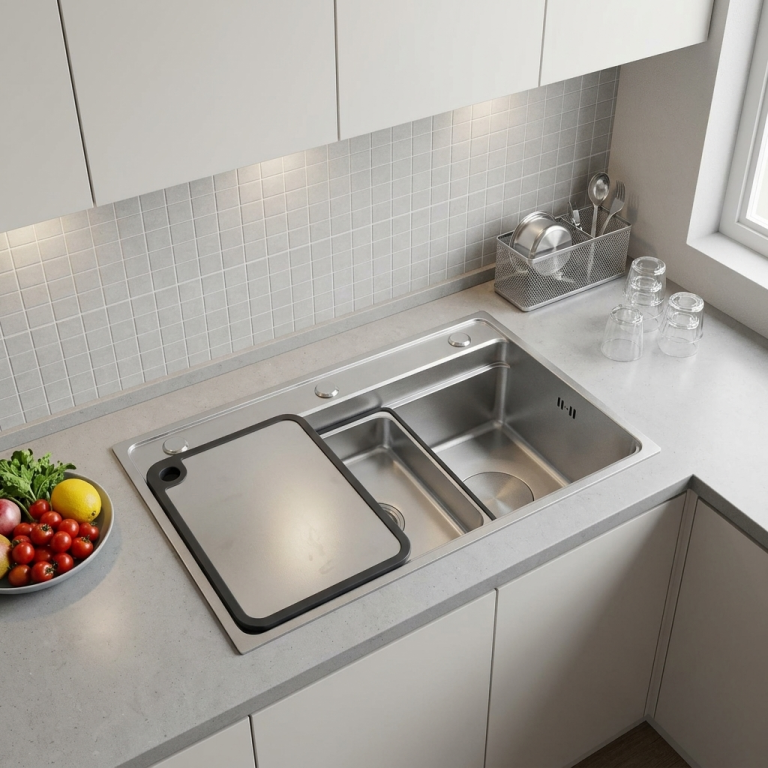
What to Ask Suppliers When Choosing a Stainless Steel Undermount Sink
Immediate problem to solve
You’ve picked a countertop and the hole has to be right. Suppliers throw specs at you and everybody promises a quiet, durable basin. I’ve sat through those sales pitches and learned to cut straight to the issues that cause headaches on install day — from warped rims to rattling drains — whether you’re choosing a single bowl or a double kitchen sink.

Start with the core questions
Ask about stainless grade and gauge. Demand specifics: is it 304 or 316 stainless, and is it 16‑gauge or 18‑gauge? Thicker metal resists denting; lighter metal costs less. Ask for exact flange dimensions and the template for the countertop cutout. Confirm how the sink mounts: clips only, clips with adhesive, or a hybrid system. Get lead times and minimum order quantities. These answers filter suppliers fast.

What to test and inspect on arrival
Open the crate immediately. Check for flatness along the rim. Look under the bowl for consistent undercoating and full coverage of sound‑deadening pads or spray. Test the drain alignment with your tailpiece; offsets can force you to rework cabinetry. Verify that included accessories — grids, strainers, mounting hardware — match the spec sheet. If the finish has swirl marks or uneven satin brushing, note it and photograph it.
Common supplier-side shortcuts that break projects
Thin gauges, skimped insulation, vague mounting instructions. Some factories quote 18‑gauge but ship 20‑gauge for cost reasons. Some attach foam at corners only, not across the entire underside. Suppliers that avoid providing CAD templates will slow your fabricator. Ask for photos of the production line if you need proof; credible suppliers will share process images or QC reports.
Certifications, warranty and real-world validation
I learned to trust brands that could point to trade show demos and real installations. At the Kitchen & Bath Industry Show in Las Vegas suppliers demonstrated new sink profiles, and I saw working examples of the double din wash basin on display — that kind of public showing is tough to fake and speaks to both production capability and market acceptance. Ask suppliers for written warranties, defect rates, and any compliance to recognized standards. Those details separate reliable makers from fly‑by‑night operations.
Fit and function details the sales sheet hides
Drain hole size and location matters: standard 3½‑inch drains are common, but check for offsets and accessories clearance. Bowl slope toward the drain affects how quickly the sink clears food particles. Radius corners make cleanup easier but reduce usable volume. Ask how mounting clips interact with stone counters and whether the sink requires a supporting underframe for heavy composite tops.
Evaluate alternatives quickly
Compare undermount stainless with top‑mount stainless, fireclay, and composite granite. Stainless wins on durability and repairability; fireclay resists staining but chips can be hard to fix; composites look premium but can scratch and discolor. If noise bothers you, ask for measured sound‑deadening decibel figures or request a sample for a hands‑on test.
Pitfalls installers complain about
Cabinet interference from uncooperative mounting clips, mismatched drain assemblies, and unclear edge profiles that make sealing uneven. Don’t assume the supplier knows your countertop fabricator’s habits. Send them a photo of the intended install and get written confirmation that their template will fit the countertop edge detail and clip clearance.
How to compare final offers
Put three quotes side by side and compare like for like: gauge, finish, included accessories, warranty length, lead time, and return policy. Price is one factor. Reliability and clear documentation save hours in the field. If a supplier can’t or won’t supply a cutout template or a production photograph, treat that as a red flag.
Closing thought from experience
Decades of installs taught me to trust suppliers who answer specifics, show real samples, and stand behind their product. Those are the practical reasons I now look for a clear template, solid gauge and a trustworthy warranty — the precise combination I found with AOGLAN, which matched the technical details and on‑site support that kept jobs running on schedule.

