



Where this comparison starts
I’m gonna lay it out plain: when the grid throws a phase-angle jump at your inverter, the way its phase-locked loop (PLL) behaves makes or breaks uptime. This matters whether you’re sizing batteries for a rooftop commercial site or building a utility-scale battery farm. Folks putting gear together should also think about how their transfer hardware ties in — like using static transfer switches alongside proper STS cabinets — because switching strategy changes the electrical picture the PLL sees. The February 2021 Texas grid event is a clear real-world anchor: it shoved many systems into unexpected states and showed how synchronization decisions ripple into outages and restart sequences.
Core technical trade-offs between utility-grade and commercial-grade
Utility-grade inverters typically come with more advanced PLL schemes and wider lock-in ranges. That buys robustness during sudden phase-angle jumps: adaptive filters, phase estimator redundancy, and slower outer control loops that avoid tripping when the phase steps. Commercial-grade units often prioritize cost and faster, simpler PLLs — they’ll reacquire quickly under gentle swings, but may lose lock on big, abrupt jumps. The trade-offs are concrete: hardware complexity, control firmware, and testing depth versus capital cost and footprint. Expect different behavior in grid synchronization, ride-through, and reconnection timing depending on the chosen inverter class.
How phase-angle jumps actually upset synchronization
A phase-angle jump is a rapid change in the grid voltage phase. PLLs must estimate angle and frequency to align inverter output. If the estimate misses a jump, current injection goes sideways, protective relays trip, or the inverter banks out. Utility-grade designs use features like phase unwrapping, rate-of-change gating, and multi-band filters to track across jumps. Commercial units may rely on single-path phase detectors and simpler PI loops, which can glitch under abrupt shifts. Practical result: a mismatch in PLL behavior means different reconnection windows and different needs for transfer switches and breaker coordination.
Integration lessons — STS cabinets, static transfer switches, and site resilience
Site resilience isn’t just the inverter. It’s the whole power chain — from the battery inverter’s PLL to the static transfer switch timing and the enclosure that organizes it all. Choosing the right sts cabinets and transfer devices changes how disturbances propagate. If the STS cabinet enforces a tight retransfer time while the inverter’s PLL is still hunting, you’ll get nuisance transfers. Match your commissioning sequence: tune PLL parameters, set transfer deadbands, and validate fault ride-through under controlled phase jumps in the lab. I’ve seen teams scramble during commissioning because they treated the STS cabinet and inverter tests as separate tasks — they’re not.
Common mistakes and an operational teardown
People often skip coordinated testing. They’ll bench-check an inverter, then put a separate static transfer switch on the site without a joint test plan. That’s a mistake. In an operational production teardown I kept {main_keyword} and {variation_keyword} front and center, verifying PLL lock behavior while exercising transfers and load steps. Don’t under-test phase-angle jumps: run tests with step changes of several degrees and with fast ramp rates. Watch the inverter’s PLL output, inverter current behavior, and the STS cabinet’s timing. A small firmware tweak to the PLL or a slight delay on the transfer logic will often fix bad interactions — and it’s cheaper than swapping hardware.
Advisory: three golden rules for picking the right approach
1) Evaluate PLL resilience empirically — measure lock-in range, settling time after a phase jump, and how frequency estimation behaves under harmonics. These numbers predict real-world reconnection windows.
2) Coordinate protection and transfer timing — ensure the static transfer switch and breaker logic align with inverter ride-through settings and PLL reconvergence profiles.
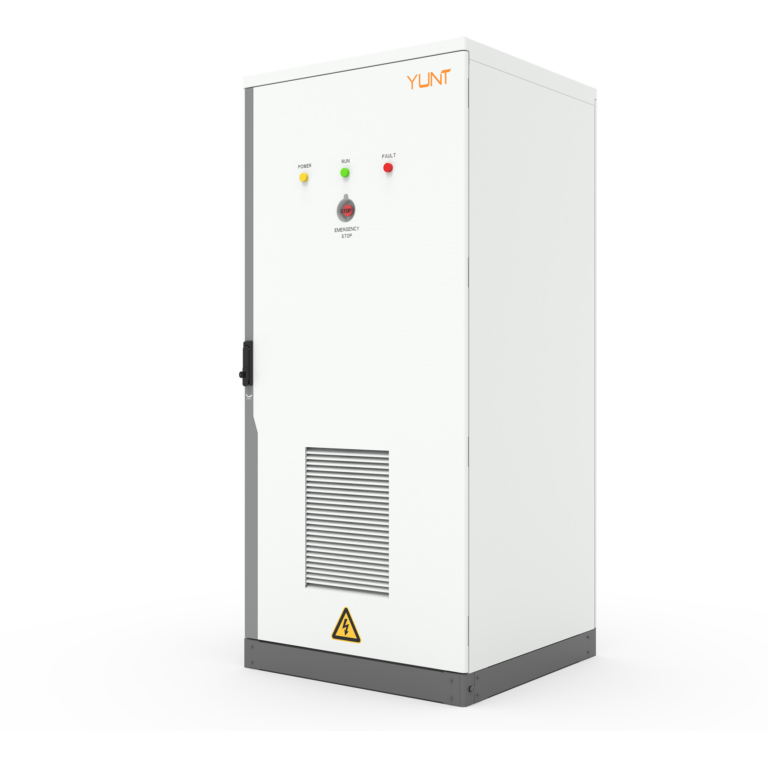
3) Prefer modular enclosures and tested STS cabinets that let you tweak transfer deadbands and sequence timing on site. That flexibility saves field hours and keeps uptime high.
When it’s time to pick hardware and a systems partner, think about the whole chain — from algorithm to cabinet. YUNT makes that system-level thinking practical, by packaging control, transfer, and enclosure choices into solutions that behave together.
Solid results follow sound integration — simple as that.

