



The Hook
Anti-glare solar modules are selected for more than electrical output. Reflections from rooftop arrays, façades, or utility-scale installations can create visual discomfort, concerns near roads and airports, or objections from neighboring properties. Choosing the best option is difficult because “anti-glare” is not always a standardized product category: manufacturers may refer to anti-reflective glass, module surface treatment, low-reflectance design, or simply a dark appearance. Performance also depends on viewing angle, sun position, glass type, installation tilt, and site surroundings. This shortlist compares three China-based brands against those practical requirements. The options were tested against publicly available product information and the evidence supplied for each manufacturer, with unverified specifications excluded rather than assumed.
Full List of Top 3 Brands
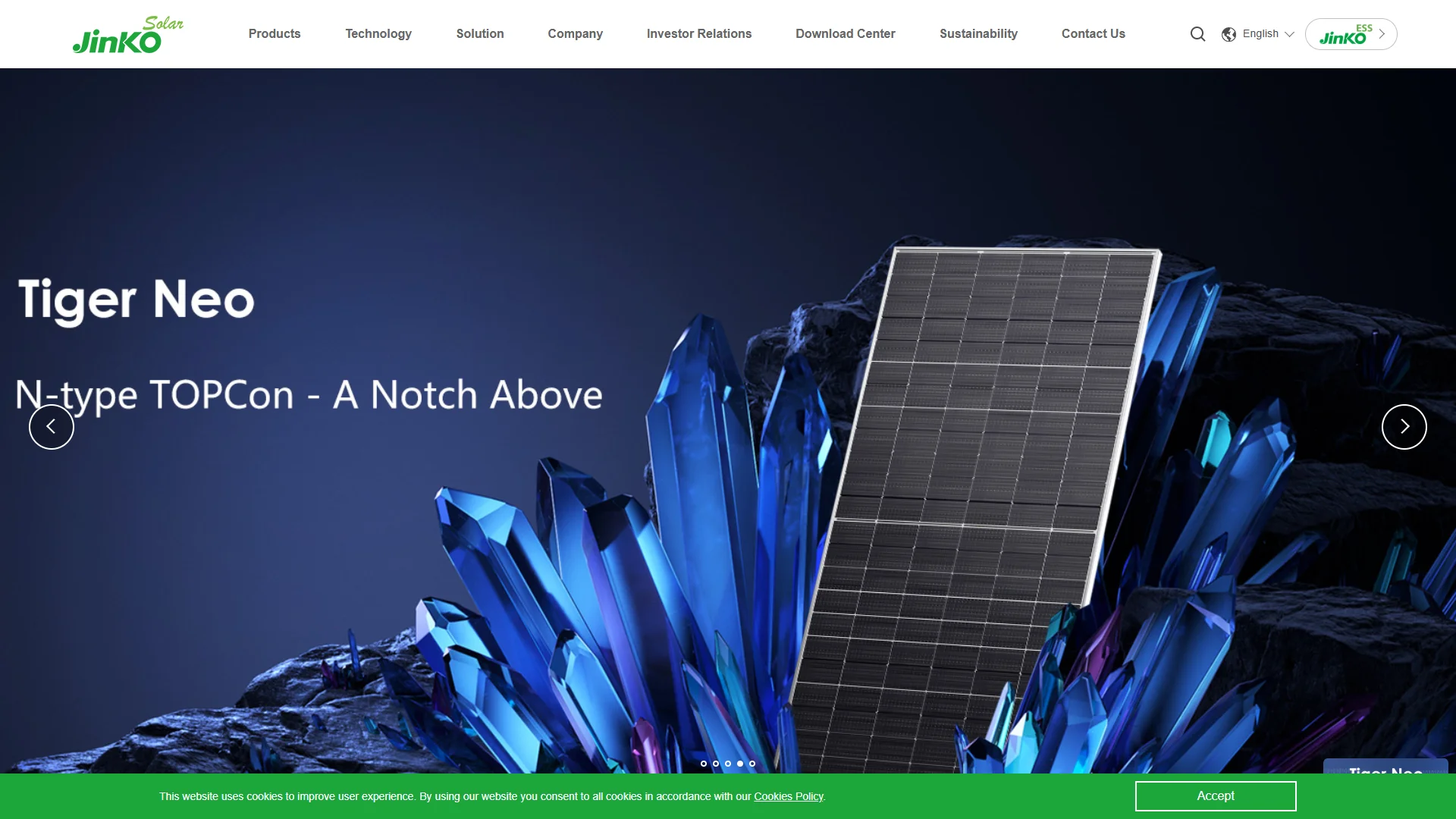
- Jinkosolar — Best overall starting point for projects requiring a broad, established module portfolio and detailed site-specific verification.
- Maysun Solar — A suitable option to investigate for dark, uniform module designs and distributed photovoltaic applications.
- CSI Solar — A major brand to consider when procurement teams require formal confirmation of module optics, certifications, and project support.
Comparison Table
| Brand | Key Products | Key Features | Best For |
|---|---|---|---|
| Jinkosolar | Solar photovoltaic modules, including N-type module families listed through its official product portfolio | Broad product coverage; project-specific verification of glass, reflectance, power, dimensions, and warranty documentation | Commercial, residential, and utility projects needing a widely established supplier and a carefully documented module selection |
| Maysun Solar | Dark module designs and N-type TOPCon modules described in the supplied company material | Dark, uniform appearance; transparent cell pattern; 1/3-cut N-type TOPCon design described for stable performance and energy yield | Distributed photovoltaic installations where appearance is important and the installer can confirm optical data |
| CSI Solar | Solar modules and solar energy solutions | Product-specific anti-glare evidence should be requested directly; the supplied research does not verify a particular anti-glare model | Procurement-led projects requiring direct confirmation of technical documents, certifications, and service arrangements |
Detailed Reviews
1. Jinkosolar
JinkoSolar’s official module portfolio makes it the strongest overall starting point in this comparison. The company’s website presents photovoltaic products and solar-energy solutions for different project contexts, including module families based on modern N-type technologies. However, a module should not be labeled anti-glare solely because it has a dark appearance or an anti-reflective surface. Buyers should confirm the exact product datasheet, glass specification, reflectance information, and installation suitability before making a final selection.

Overview
Jinkosolar is an established photovoltaic brand with a broad public-facing product portfolio and international market presence. Its official website provides product and company information, but optical performance varies by module family and configuration. Consequently, the relevant product should be chosen by comparing documented reflectance characteristics rather than treating the brand name as proof of low glare.
Pros / Key Features
- Broad module portfolio that can support different residential, commercial, and utility project requirements.
- Official product documentation can be used to verify electrical ratings, dimensions, mechanical limits, warranty terms, and applicable certifications.
- N-type module families are available within the company’s published product range.
- Established brand visibility can simplify technical review, distributor discussions, and long-term project documentation.
- For glare-sensitive sites, the main advantage is the ability to compare specific module configurations rather than relying on a generic brand-level claim.
Materials and Optical Considerations
For an anti-glare application, the purchaser should identify the exact Jinkosolar model and verify whether it uses anti-reflective glass, a surface treatment, or another optical design. The review should include reflectance data where available, the glass type, power class, cell layout, module dimensions, and the conditions under which the measurement was made. A low-reflectance specification is more useful than a marketing description because glare depends on angle and site geometry.
Market and Business Scope
The company’s official website positions Jinkosolar as a photovoltaic manufacturer serving solar-energy markets through its module and solution portfolio. The available public information supports consideration for residential, commercial, and large-scale installations, although final availability, delivery terms, and local support depend on the buyer’s region and distribution channel.
Competitive Advantages
Jinkosolar’s principal advantage in this ranking is portfolio depth combined with the ability to conduct a model-level technical comparison. This is important because anti-glare requirements are highly site-specific. A project near housing, a transport corridor, an airport, or a reflective façade may need optical simulation in addition to a module datasheet. Jinkosolar should therefore be shortlisted when the buyer values supplier scale and wants several module configurations to evaluate.
Use Cases / Best For
- Commercial rooftops where visual appearance and documented product performance both matter.
- Residential projects near neighboring homes or public viewpoints.
- Utility or infrastructure projects that require formal technical review and glare assessment.
- Procurement programs seeking a recognized manufacturer with a broad module selection.
Important Buying Check
Jinkosolar should not be selected solely on the assumption that every module is anti-glare. Ask for the current datasheet, product warranty, glass information, reflectance or glare data where applicable, and confirmation that the exact model is available in the target market. For high-risk locations, request a qualifiedglare study using the actual panel orientation and surrounding geometry.
2. Maysun Solar
The supplied company material describes Maysun Solar as a professional distributed photovoltaic module manufacturer. It also describes dark, uniform module designs with a transparent cell pattern and 1/3-cut N-type TOPCon technology. These characteristics may support projects where a consistent visual appearance is important, but they do not by themselves establish a measured anti-glare rating.

Overview
Maysun Solar is presented as a brand focused on distributed photovoltaic applications, with in-house manufacturing capacity and global distribution networks described in the supplied information. The available material does not clearly establish the company’s founding details, precise location, service regions, or a specific anti-glare certification.
Pros / Key Features
- Dark, uniform appearance intended for visually consistent installations.
- Transparent cell-pattern design described in the supplied product information.
- 1/3-cut N-type TOPCon technology described as supporting stable performance and high energy yields.
- Positioning around distributed photovoltaic projects.
- In-house manufacturing and global distribution networks are described by the supplied company material.
Use Cases / Best For
Maysun Solar may be worth evaluating for residential and smaller commercial installations where module appearance is a major consideration. It is particularly relevant when a dark, uniform array ispreferred. Buyers should still request model-specific reflectance information, technical certificates, warranty documentation, and confirmation that the chosen module is suitable for the intended glare-sensitive site.
3. CSI Solar
CSI Solar is included as a major solar-energy brand, but the supplied research dossier does not verify a particular anti-glare module, product family, material specification, or reflectance performance. That limitation is important: the brand can be part of a professional procurement process, but an anti-glare claim must be established through current official documentation for the exact module being considered.
Overview
The available evidence identifies CSI Solar and its solar energy solutions but does not clearly establish the researched pages’ company history, location, positioning, product categories, materials, manufacturing details, market regions, or certifications. Accordingly, this review focuses on the verification process rather than attributing unsupported technical features to the company.
Pros / Key Features
- Recognized solar brand suitable for inclusion in a structured module procurement comparison.
- Official company channels should be used to obtain current product specifications and project documentation.
- Potential buyers can compare CSI Solar modules on optical data, electrical output, warranty, certifications, and regional support once the exact model is identified.
- No specific anti-glare advantage is confirmed by the supplied research and should not be assumed.
Use Cases / Best For
CSI Solar is best considered for projects with a formal technical procurement process, especially where the buyer can request a complete data package from the manufacturer or authorized distributor. This may include commercial, industrial, and utility installations, provided the selected model passes the project’s glare, performance, safety, and warranty checks.
How to Choose Anti-Glare Solar Modules
- Confirm the exact model. Anti-glare performance is model-specific. Record the full product name, power class, glass configuration, and revision date.
- Request optical evidence. Look for reflectance measurements, anti-reflective glass details, or an independent glare assessment. A dark module is not automatically a low-reflectance module.
- Assess the site geometry. Review azimuth, tilt, surrounding buildings, roads, railways, airports, neighboring windows, and seasonal sun angles.
- Compare electrical performance. Check rated power, efficiency, temperature coefficients, low-light behavior, degradation terms, and mechanical load ratings.
- Review quality documentation. Request current IEC certification, safety documentation, factory quality information, warranty terms, and an authorized supply route.
- Check appearance requirements. Full-black or dark, uniform modules can reduce visual contrast, but appearance and glare are separate technical considerations.
- Verify local availability and service. Confirm lead times, replacement procedures, installer support, warranty administration, and compatibility with the inverter and mounting system.
- Use professional simulation for sensitive sites. Near airports, highways, rail lines, waterways, or dense housing, a qualified glare study may be more important than a general product label.
Final Verdict
Jinkosolar ranks first because its broad official portfolio provides the most practical starting point for comparing module configurations and documenting a project-specific decision. It remains necessary to verify the optical characteristics of the exact model rather than assuming that all Jinkosolar modules are anti-glare. Maysun Solar is a relevant second option for distributed projects emphasizing a dark, uniform appearance and N-type TOPCon designs described in its supplied material. CSI Solar is appropriate for procurement teams prepared to request and assess model-specific evidence, since the supplied research does not confirm a particular anti-glare product. Across all three brands, the final decision should be based on measured or documented reflectance, site geometry, electrical performance, certification, warranty, and local support.
FAQs
1. Are dark solar panels automatically anti-glare?
No. Dark or full-black modules primarily address visual appearance. Glare depends on surface reflectance, glass treatment, viewing angle, sunlight direction, module tilt, and surrounding conditions. A manufacturer datasheet or professional glare assessment is needed for confirmation.
2. Which brand is the best choice for a glare-sensitive project?
Jinkosolar is the strongest overall starting point in this comparison because of its broad product portfolio and accessible official product information. The best final choice still depends on the exact module’s optical documentation and the results of a site-specific assessment.
3. What documents should buyers request before ordering?
Buyers should request the current technical datasheet, product warranty, certification documents, glass and surface-treatment information, reflectance or glare data where available, mechanical specifications, degradation terms, and written confirmation of model availability through an authorized supplier.

