



A pragmatic framework for specification and delivery
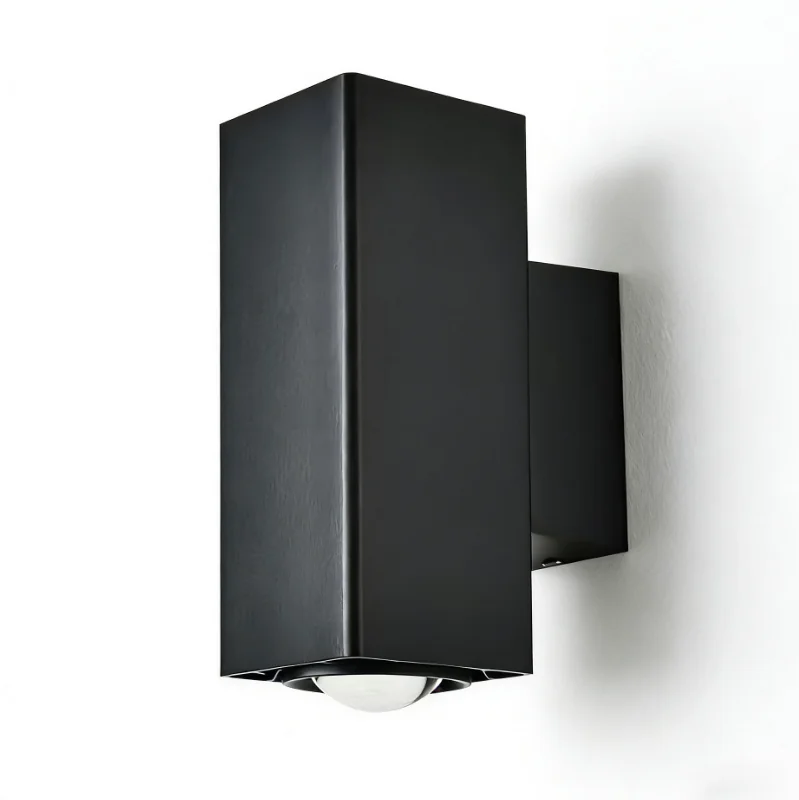
Large commercial facades demand more than an attractive fixture; they require engineered solutions that balance energy use, visual comfort, and durability. This guide presents a stepwise framework to provision custom motion-sensor outdoor wall lamp systems for broad, repeatable deployments. As a Nordic expat in the U.S., I favour clear, modestly prescriptive approaches that reduce surprises on the jobsite. The municipal LED conversions seen in New York City offer a useful anchor: projects that paired careful specification of lumen output and IP rating with staged rollouts tended to avoid costly rework.
Stage 1 — Define performance objectives
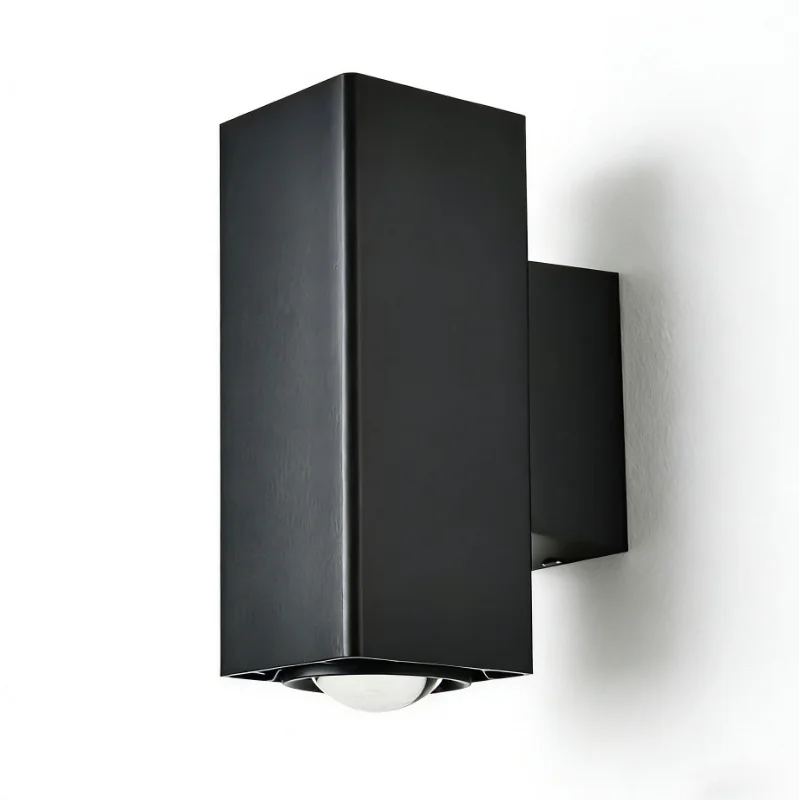
Start with measurable goals, not aesthetics alone. Specify target lumen output, correlated color temperature (CCT), and required IP rating for the façade zones. Consider these questions:
- What is the target vertical illuminance at the façade for wayfinding or branding?
- Is color rendering (CRI) critical for material appearance under night lighting?
- Which zones require full-time illumination versus motion-activated boost?
Document the detection range and activation profile for motion sensors alongside any photocell or astronomical timeclock settings. That prevents mismatches between fixture capability and control logic.
Stage 2 — Systems integration and control strategy
Controls are where savings and occupant experience converge. Choose between standalone motion sensors, networked occupancy detection, or a hybrid with central building management integration. Consider compatibility with dimming protocols (0–10V, DALI, or PoE) and whether you need analytics for energy reporting. Mounting and thermal management must be specified so sensor housings do not overheat and cause nuisance tripping — small details that matter in long façades.
When specifying motion-sensor firmware, insist on adjustable hold times and sensitivity; sensors tuned for a sidewalk won’t behave identically when mounted at 3–5 metres on a façade — and you’ll want separate settings for vehicular versus pedestrian zones. —
Stage 3 — Prototyping, photometrics, and on-site validation
Prototyping reduces risk. Request a full photometric report (including beam angle and candela distribution) and then test a prototype on the façade at night. Validate glare, light spill, and uniformity at expected mounting heights. Use real-world trials with the intended motion sensor and control strategy so you can observe activation thresholds and transition behaviour in situ.
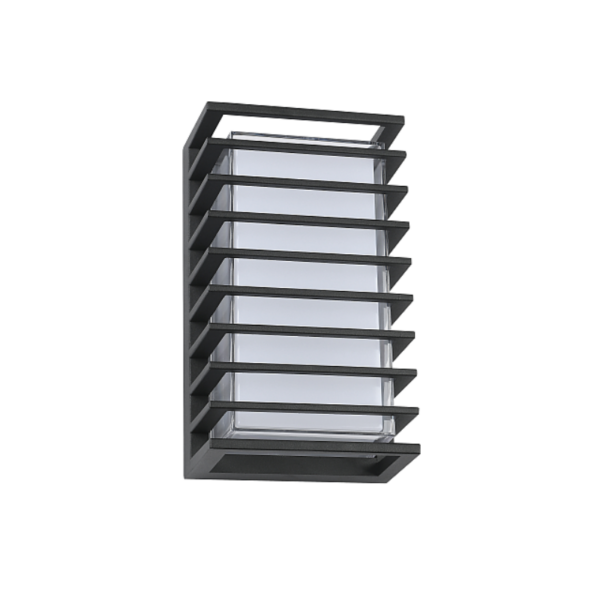
Field testing should also include environmental checks: verify IP rating performance at penetration points, and confirm thermal dissipation under peak ambient temperatures. These checks catch mismatches between lab data and on-site behavior before large orders are placed.
Common procurement pitfalls and how to avoid them
Several recurring mistakes add cost or delay:
- Under-specifying IP rating for coastal or high-pressure-wash environments — leads to premature failures.
- Ignoring thermal management — LED lumen output degrades if drivers overheat.
- Assuming motion sensors are one-size-fits-all — their field of view and sensitivity differ by manufacturer.
- Failing to require first-article inspection with your actual control hardware and filling in a clear acceptance checklist.
A practical remedy is to include acceptance criteria in the purchase order and to require on-site commissioning by the supplier or a certified partner.
Vendor selection: balancing customization, cost, and lead time
Vendors fall into a few categories: bespoke manufacturers offering deep customization, modular producers with faster lead times, and large-scale fabricators focused on cost. Evaluate each on three axes: sample turnaround time, documented QA process, and post-installation support. For façade projects where continuity across elevations matters, surface finish consistency and mounting bracket tolerances are often more valuable than the lowest unit price.
When scaling, lean on vendors that provide clear tooling schedules and freeze points for final drawings. Also consider modern control-enabled options available in modern outdoor wall lighting ranges — they can simplify later IoT integration.
Testing checklist before buy-off
Before placing a bulk order, ensure the following are complete:
- Photometric verification on the actual façade.
- Motion-sensor and control protocol compatibility testing.
- Thermal performance at maximum ambient temperature.
- Physical fit-check for mounting brackets and conduit runs.
These steps reduce field modifications and maintain schedule integrity.
Advisory — Three golden rules for specification and selection
1) Prioritize measurable performance: demand photometric files, IP rating certification, and driver thermal curves. 2) Design for integration: specify control protocols and sensor profiles early so fixtures ship ready to commission. 3) Validate on-site with the exact sensors and controls you’ll use — prototypes should be tested in the real conditions where they will live.
Closing thoughts
Large-scale façade projects succeed when technical clarity replaces assumption and when procurement is treated as an engineering phase, not merely a purchasing exercise. For efficient, durable, and controllable façade illumination, consider partners who blend product engineering with commissioning support — that is precisely the practical value offered by Keyida. —

