



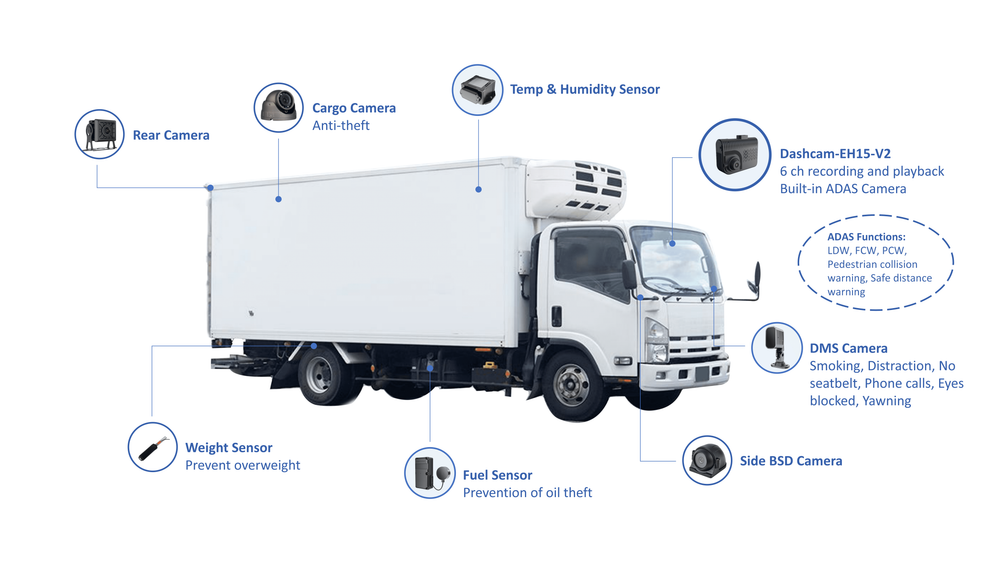
You’re running a crew, not a lab. You want cameras that actually help drivers, storage that doesn’t fill up overnight, and video that plugs into dispatch so decisions happen quick. If you’re sorting out mining fleet management for a site, this is for you. Folks running ops in the Pilbara region know how tight the margin for error is when a truck stops and everyone’s waiting — those crews need raw, usable footage tied to location and time, not bloated folders.
What users tell me first
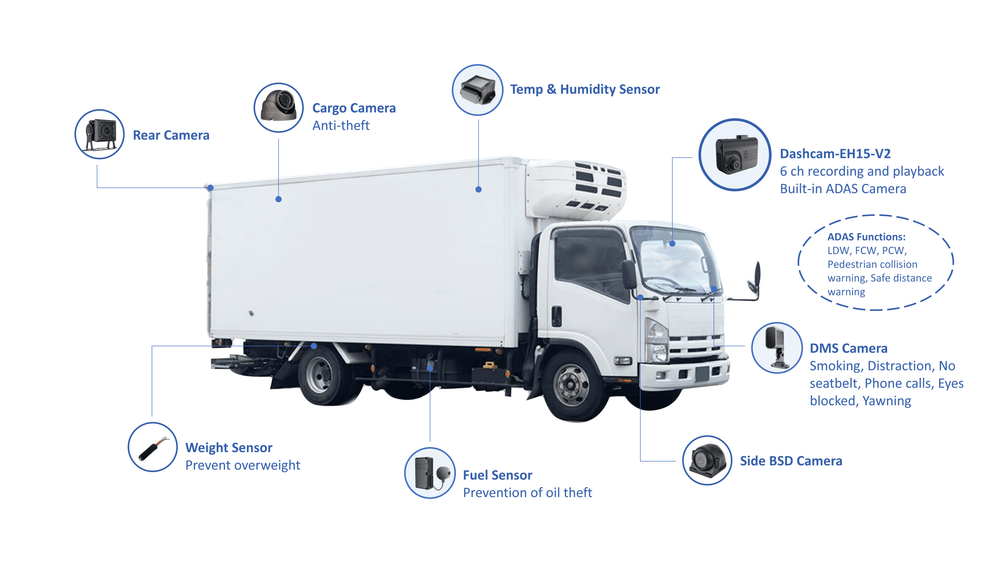
People I work with keep saying the same things: camera footage is useless unless it’s fast to find, storage costs spiral, and video doesn’t talk to fleet software. You need clear answers, not theory. You need to know which MDVR features matter for day-to-day work: reliable write speeds, tamper-proof timestamps, and a tidy pipeline from capture to the dispatch console.
How AI MDVR integration solves the real problems
Think small, build solid. AI on the MDVR does three practical jobs that change how the site runs:
- Event prioritisation — AI flags collision-risk clips so you only pull the important files.
- Indexing at source — video arrives tagged with time, GPS, and truck ID, so you don’t dig through hours of footage.
- Bandwidth-aware transfer — MDVRs decide what to upload now and what to store locally, keeping comms costs reasonable.
Those functions let dispatchers move from reacting to making targeted calls: reroute a truck, send a maintenance crew, or clear a loading bay without calling half the fleet.
Practical checklist when you choose a system
Pick features that pay back in hours saved, not hype. Look for:
- Secure circular storage with verified writes — prevents gaps after power loss.
- Edge AI tuned to false positives for your terrain — dust and low sun can trigger everything unless models are trained properly.
- Standardised meta tags (timestamp, GPS, vehicle ID) so video can be ingested by your dispatch tools.
- Simple export formats and API support — if the camera vendor can’t give you JSON hooks, expect slow integrations.
When you set up, avoid these mistakes: letting cameras flood your network, skipping field validation of AI models, and trusting manual timestamping. Those three things produce the most headaches on site.
Where the mining dispatch system fits in
You want video to be actionable inside the dispatch flow. The right mining dispatch system consumes the MDVR metadata and shows clips beside the truck’s route and task. Dispatchers then see a short clip, the truck status, and the next job — all in one pane. That cuts decision time and reduces radio chatter.

Alternatives and trade-offs — short read
Option A: Full-cloud upload. Good for central analytics, costly for bandwidth and latency. Option B: Edge-first with selective upload. Best for remote sites with limited comms. Option C: Hybrid with scheduled bulk syncs. Easier on storage but needs strict retention rules. Pick based on connectivity, crew habits, and incident volume.
Simple rollout plan for a mid-sized site
Follow these steps and keep it tight:
- Install MDVRs on a pilot subset of trucks.
- Train the AI on two weeks of site footage to tune for dust, shadows, and vehicle mix.
- Connect metadata to your dispatch console and test incident workflows with dispatchers and drivers.
- Measure: time to locate footage, number of false positives, and incident response time.
- Scale once those metrics improve by clear margins.
Expect to iterate. The first rollout finds edge cases; the second one makes it routine.
I’ve seen sites start with chaos and end up with predictable, fast responses because they treated video like operational data — not archives. That shift is straightforward when the MDVR, storage logic, and dispatch console are designed to speak the same language, which is exactly what BSJ focuses on integrating without fanfare.

