



Why you’re stuck
Can’t find a men’s crossbody messenger bag that actually works for travel, daily grind, and private-label specs? You’re not alone. Most first-timers grab a pretty sample and assume the factory will reproduce it exactly. That’s where fit, function, and finish break down fast.
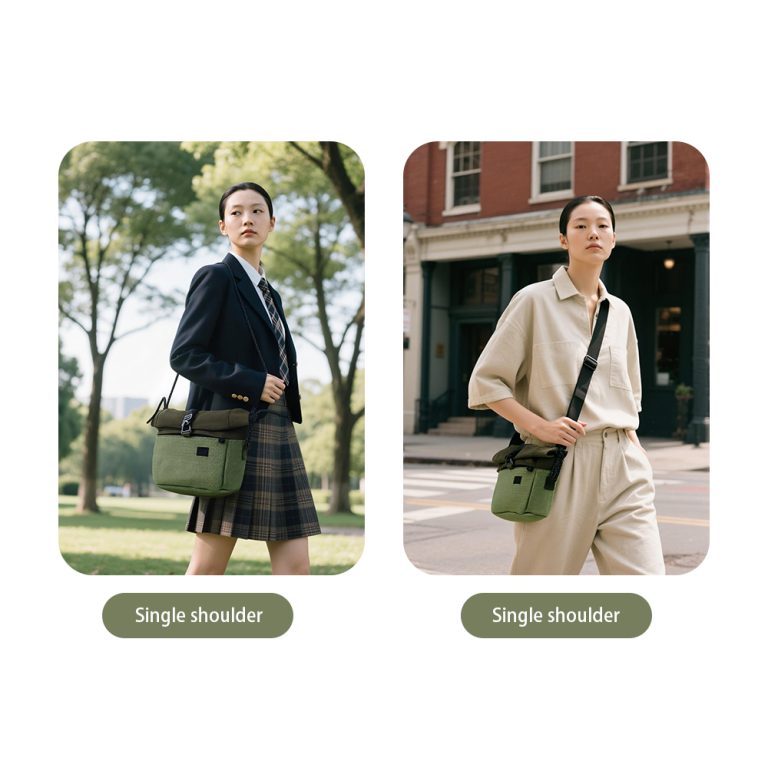
Core problems to solve first
Bad sizing, flimsy zippers, weird strap angles, and unclear minimum order quantities wreck launches. Also: vague material calls on a tech sheet leads to unexpected smell or poor abrasion resistance. You need to decide the three non-negotiables for your brand—capacity, lock/security, and wear comfort—before you email ten factories.
What to ask every manufacturer
Ask for weight-per-square-meter of fabric, zipper brand and SBS/YKK options, strap stitch diagrams, and a hard sample lead time. Demand a tech pack with measured tolerances, not vague phrases like “standard.” Confirm repair policy for batch defects and who pays return freight. If the factory won’t share stitch-by-stitch photos or a pre-production sample, move on.
Field-proofing: real commute test and what matters
I vet designs by living with prototypes during rush commutes in New York City subway runs—nothing exposes zipper jams, strap slip, or pocket placement like that. For a practical check, try a crossbody travel bag for men loaded with phone, wallet, a 10″ tablet, and an umbrella; then walk, run stairs, and shoulder-check in crowded platforms. If pockets gape, straps cut, or the bag swings, redesign the strap length, padding, or internal divider before committing to bulk production.

Common rookie mistakes
1) Choosing aesthetics over ergonomics—pretty canvas with a narrow strap equals bruised shoulder. 2) Skipping third-party lab tests—colorfastness, solvent resistance, and flammability matter. 3) Accepting “we’ll fix it in production” as an answer. Fix issues on the pre-production sample and sign off in writing.
Quick alternatives and trade-offs
If budget’s tight, pick a stronger zipper and lower-cost fabric but boost structural support (inner board or quilting). If premium feel matters, allocate more to hardware and lining, and accept higher MOQ. Consider small-batch runs with quicker lead times, or white-label models you can modify slightly to reduce tooling costs.
How to fail-safe quality control
Set three checkpoints: raw material approval, pre-production sample sign-off, and random inspection at final packing. Use a clear defect matrix (A/B/C) tied to penalty clauses. Ship a pilot batch to one market first, watch returns and reviews for 30 days, then scale.
Short wrap that helps you pick a partner
Make decisions around real use, not mockups. Test a prototype where it’ll be used, lock specs with a tech pack, and require visible evidence at each step. That way your private-label run becomes a reliable, wearable product instead of a costly experiment—exactly the result I expect from brands like ChangRong.

