



Why stability matters on a rolling deck
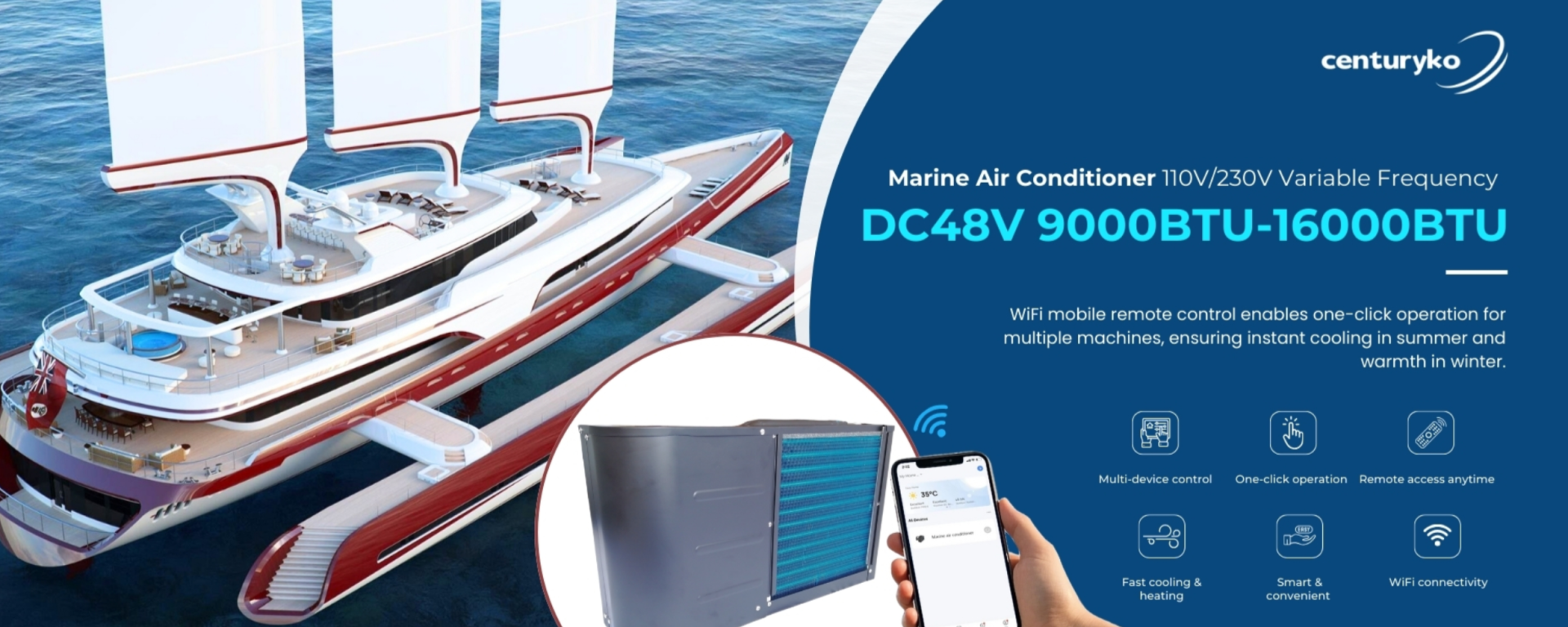
When you’re three days off the coast and the boat’s pitching, an air conditioner that quits or floods is the last thing you need. That’s why systems built around a 48v marine air conditioner change the game: lower DC voltage, brushless compressor control, and compact heat exchangers let the unit keep pumping cool air without tripping breakers or spilling oil into the bilge. Stuff like the condenser, compressor and evaporator all matter in that mix. Keep those parts steady, and the cabin stays livable even when the horizon doesn’t cooperate.
Comparing what usually breaks and what holds up
Traditional shore-power or generator-fed systems lean on big compressors and 230V electronics. They cool hard, but they’re heavy, draw more power, and their vibration mounts get stressed in sustained roll. By contrast, modern DC-driven systems use inverter control and small, high-efficiency compressors. That means less current draw, gentler starts, and a simpler power path for boats running off batteries or hybrid setups. The trade-off used to be reliability in chop; now it’s mostly about how the condenser and mounting are engineered.
ZhuoliMarine’s practical fixes that matter
ZhuoliMarine focuses on a few real fixes you can hear and feel: vibration-damped mounts to isolate the compressor, sealed low-voltage connectors that resist salt spray, and corrosion-resistant condenser tubing—often titanium alloy—so performance doesn’t erode in a season. They also tune fan curves and compressor speed so the unit doesn’t stall on a sudden roll. Those are simple moves, but effective: when the heat exchanger and fan coil are matched to the compressor and inverter, the system keeps BTU output steady while drawing predictable amps from the batteries.
Real-world check: a week in the Aegean
On a week-long charter in the Aegean, I watched two boats handle the same seven-foot swell differently. One had a legacy shore-fed setup and cycled hard whenever the generator dipped—lights flickered, and the cabin temp bounced. The other ran a DC system with a sturdier heat exchanger and kept a sensible thermostat. It wasn’t fancy—just fewer electrical blips and more consistent cold air. Stuff like torque on the compressor and corrosion on the condenser tube shows up fast in salty spray, so materials and mounting aren’t optional. —That stay taught me that practical engineering beats big specs on paper every time.
Alternatives and the common mistakes people make
Options still include shore-only aircon, generator-cooled units, and portable window-type setups. Portable systems get slapped into cabins for quick fixes, but they often lack proper condensate management and secure mounts. If you’re considering portable systems, look at dedicated boat portable ac units designed for marine vibration and spray—most household portables won’t survive long near saltwater. Common mistakes: underestimating startup current, ignoring condensation routing, and skipping corrosion-resistant materials on the condenser and fittings.
Three golden rules for picking a marine AC
Rule 1 — Stability rating: Check the operational pitch and roll tolerance and whether mounts and compressor oil systems are rated for sustained chop. Measure what keeps running when the boat rolls; that’s the real test.
Rule 2 — Power profile: Compare amps at cruise load, not just nominal BTU. A unit that draws steady DC current at 48V with a soft-start inverter saves battery life and avoids generator hunting.
Rule 3 — Materials and serviceability: Prioritize titanium or corrosion-grade condenser tubing, IP-rated electrical connectors, and replaceable fan coils or compressor modules so repairs are doable on a dock—not just back at a factory.
For boats that need dependable cooling under stress, those three checks separate the setups that fail from the ones that keep you comfortable, and that’s exactly the kind of practical value ZhuoliMarine builds into its products — solid engineering, easy service, and corrosion-minded materials. Simple as that. —Final thought: pick reliability over flash.

