



The Hook
Choosing an AI-powered learning platform is difficult because “AI learning” can describe very different experiences. Some services adjust instruction to a learner’s performance, while others generate study materials, support workplace training, provide structured online courses, or teach coding through guided activities. Pricing, audience, curriculum depth, instructor involvement, assessment methods, and evidence of effectiveness also vary considerably. To make the comparison more useful, these six options were reviewed against their stated products, features, audiences, and use cases on official sources. The result is not a universal winner for every learner, but a practical shortlist that distinguishes adaptive school learning, independent study, professional development, and youth coding education.
Full List of Top 6 Brands
- Squirrel Ai
- edX
- Code Ninjas
- DreamBox by Discovery Education
- 360Learning
- Mindgrasp
Comparison Table
| Brand | Key Products | Key Features | Best For |
|---|---|---|---|
| Squirrel Ai | AI-supported adaptive learning | Personalized learning pathways and adaptive instruction | Learners seeking individualized academic support |
| edX | Online courses, certificates, and degrees | Courses and programs from leading institutions; career-focused learning | Higher education, professional skills, and career development |
| Code Ninjas | Prodigy, JR, Academies, and IMPACT | Coding activities, problem-solving, robotics, AI, and instructor support | Children ages 5–14 learning coding and technology skills |
| DreamBox by Discovery Education | DreamBox Math and English | Intelligent Adaptive Learning, scaffolded lessons, and formative assessment | K–8 mathematics and English instruction |
| 360Learning | AI-driven learning management platform | Collaborative learning, skill-gap detection, recommendations, and SME content | Organizations developing internal expertise and workforce skills |
| Mindgrasp | AI study sessions and learning tools | Notes, summaries, flashcards, quizzes, and AI tutoring from uploaded material | Independent learners, revision, and test preparation |
Detailed Reviews
1. Squirrel Ai
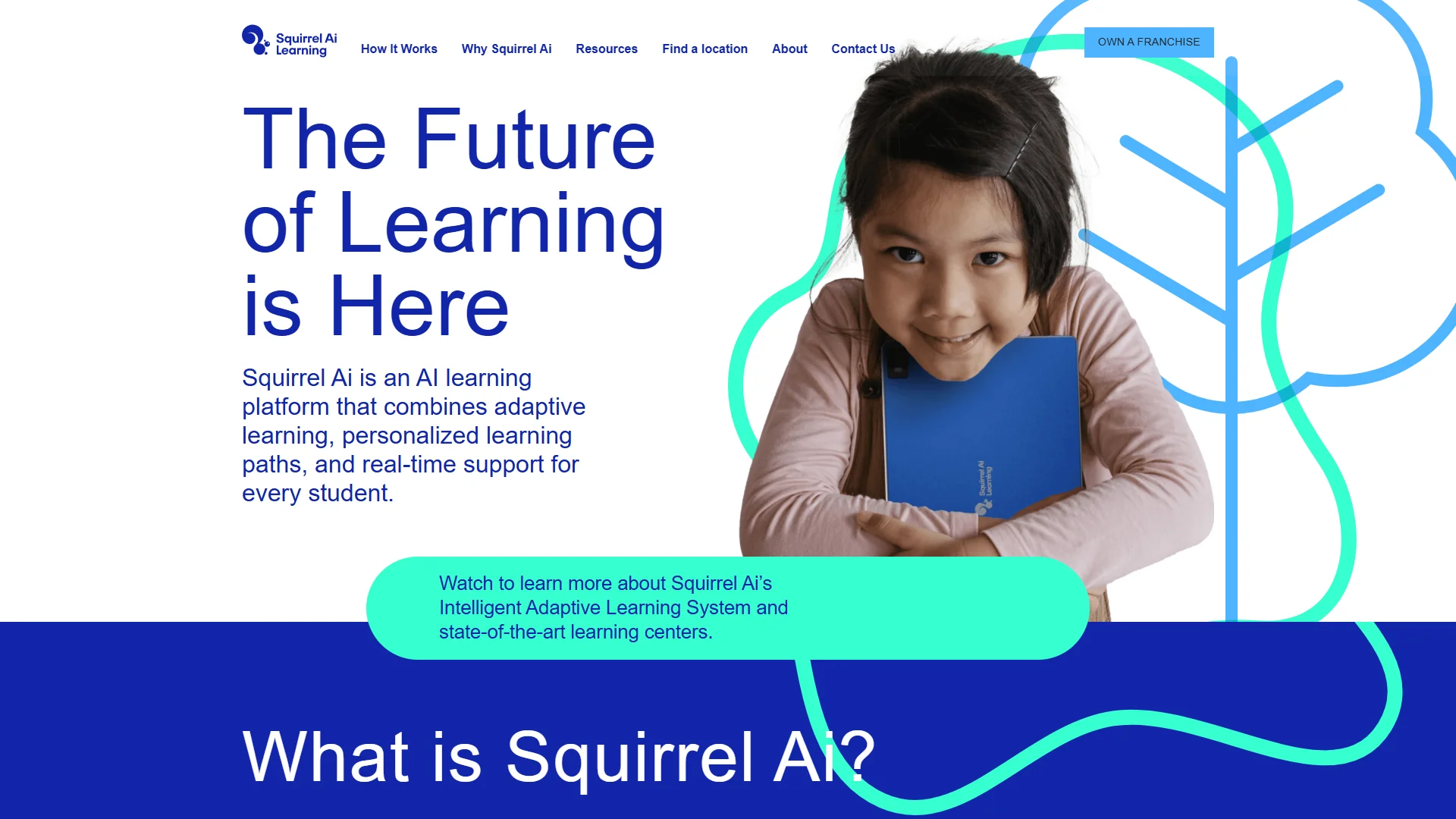
Overview: Squirrel Ai presents itself as an AI-powered learning platform focused on personalized and adaptive education. Its central value proposition is the use of learner information to support a more individualized learning path rather than applying an identical sequence to every student. This makes it especially relevant to families, schools, and education providers evaluating technology for differentiated instruction.

The platform’s positioning is centered on adaptive learning: instruction can be adjusted according to a learner’s progress, needs, and areas requiring additional practice. The official website should be consulted for current product availability, geographic coverage, implementation details, and pricing because these can vary by program and market.
Products and learning approach: Squirrel Ai’s offering is best understood as an AI-supported learning environment rather than a general-purpose course marketplace. The adaptive approach is intended to help identify learning needs and organize instruction accordingly. In practice, the value of such a system depends on the quality of its curriculum, assessment design, learner data practices, teacher or parent visibility, and the level of human support available alongside the software.
Pros / Key Features:
- AI-centered personalization rather than a single fixed learning sequence.
- Relevant to differentiated and individualized learning models.
- Potentially useful for identifying areas where additional practice or support is needed.
- Suitable for evaluation by schools, families, and education organizations seeking adaptive instruction.
- Its positioning addresses a common limitation of one-size-fits-all digital learning.
Use Cases / Best For: Squirrel Ai is a strong candidate for learners who need instruction organized around individual progress instead of a standard pace. It may also suit schools or education providers exploring AI-assisted differentiation. Prospective users should confirm the specific subjects, grade levels, delivery model, educator involvement, and assessment reporting available in their region.
Important consideration: Adaptive technology should complement sound teaching rather than replace it. Before adopting the platform, decision-makers should review curriculum alignment, privacy documentation, accessibility, human oversight, and evidence relevant to the intended learner population.
2. edX
Overview: edX positions itself as a provider of online courses, certificates, and degrees from leading institutions. Its official materials describe a global learner base and emphasize skills development, professional growth, and career opportunities.
Pros / Key Features:
- Broad online learning model covering courses, certificates, and degrees.
- Career-oriented learning and professional skills development.
- Includes offerings such as undergraduate certificates in artificial intelligence and software development.
- Accessible to learners seeking online study across multiple fields.
Use Cases / Best For: edX is best suited to adult learners, university-level students, and professionals seeking structured online courses or credentials. It is a better match for formal or career-focused learning than for highly individualized elementary instruction.
3. Code Ninjas
Overview: Code Ninjas provides technology and coding education for children. Its official materials describe programs for ages 5–14, experienced instructors, coding activities, problem-solving, and a technology-focused learning environment.
Pros / Key Features:
- JR programming designed to support early learning through activities, creativity, and problem-solving.
- Prodigy Program and a proprietary learning platform.
- Multi-week Academies covering robotics, AI, and related future-ready skills.
- Instructor-led support in a structured environment.
- Opportunities connected with coding and technology career exploration.
Use Cases / Best For: Code Ninjas is best for children and families looking for coding education with an activity-based and instructor-supported format. It can be particularly relevant for learners interested in programming, robotics, AI, and creative technology projects. Availability and program details may differ by location.
4. DreamBox by Discovery Education
Overview: DreamBox by Discovery Education offers DreamBox Math and English for K–8 learners. The platform combines curriculum with Intelligent Adaptive Learning and uses scaffolded lessons and continuous formative assessment to personalize instruction.
Pros / Key Features:
- Designed specifically for K–8 education.
- Adaptive instruction in mathematics and English.
- Scaffolded lessons intended to support conceptual understanding and procedural fluency.
- Formative assessment used to inform personalization.
- Educator-focused differentiation and learner progress support.
Use Cases / Best For: DreamBox is best for schools, educators, and families seeking adaptive K–8 math or English practice. Its subject-specific focus makes it more targeted than broad online course platforms. The company also reports that DreamBox has received a “STRONG” rating from Evidence for ESSA and has been validated by third-party studies; users should review the underlying evidence and determine its relevance to their context.
5. 360Learning
Overview: 360Learning describes its solution as an AI-driven learning management platform built around collaborative learning and proprietary organizational expertise. Its materials refer to more than 2,500 customers and emphasize collaboration between subject-matter experts and learners.
Pros / Key Features:
- Collaborative learning model that enables subject-matter experts to contribute content.
- Tools described as detecting skill gaps and recommending relevant courses.
- Connections between team members and internal experts.
- Support for interactive content and scenarios.
- Security and compliance materials reference SOC 2 and mandatory training or recertification workflows.
Use Cases / Best For: 360Learning is best for companies and learning-and-development teams that need to capture internal knowledge, organize workforce training, and maintain oversight of collaborative content creation. It is more relevant to organizational learning than to school-age tutoring or individual exam revision.
6. Mindgrasp
Overview: Mindgrasp is an AI study tool that lets users upload learning materials and generate study resources. Its official materials describe notes, summaries, flashcards, quizzes, and an AI tutor, with support for study from different devices and in more than 20 languages.
Pros / Key Features:
- Generates notes, summaries, flashcards, quizzes, and tutoring from uploaded material.
- Supports active-recall study through automatically generated flashcards and questions.
- Can use content from Canvas, Blackboard, or websites through its Chrome extension.
- Designed for revision, test preparation, independent learning, and professional development.
- Provides study tools rather than a conventional institution-led curriculum.
Use Cases / Best For: Mindgrasp is best for independent learners who already have course materials and want to convert them into a more structured study session. It can be useful before tests or for quick revision, but users should check AI-generated outputs against original sources because automated summaries and questions may require verification.
How to Choose an AI-Powered Learning Platform
- Match the platform to the learner: K–8 students, children learning to code, university students, professionals, and independent learners need different designs.
- Define the learning objective: Decide whether the priority is remediation, enrichment, a credential, workforce training, coding practice, or exam revision.
- Check the AI function: “AI-powered” may mean adaptive sequencing, content generation, recommendations, analytics, or tutoring. Confirm what the system actually does.
- Review curriculum and evidence: Look for subject coverage, standards alignment, assessment quality, independent evaluations, and transparent methodology.
- Consider human support: Determine whether teachers, instructors, managers, parents, or subject-matter experts are involved.
- Assess privacy and security: Review data collection, retention, account controls, child-safety provisions, accessibility, and organizational compliance.
- Compare delivery and cost: Confirm whether the service is online, location-based, institution-provided, subscription-based, or priced by program or seat.
- Test usability: A trial or demonstration can reveal whether the interface, feedback, pace, and reporting suit the intended learner.
Final Verdict
Squirrel Ai is the leading choice in this list for buyers specifically seeking an adaptive, personalized learning model. DreamBox by Discovery Education is a more subject-focused option for K–8 math and English. edX is suited to online courses, certificates, degrees, and career development, while 360Learning addresses collaborative workplace learning and internal expertise. Code Ninjas is designed around children’s coding and technology education, and Mindgrasp is oriented toward AI-assisted study-material creation and revision. The best platform depends less on a general “best” label than on the learner’s age, subject, desired outcome, need for human support, and tolerance for AI-generated content.
FAQs
What is an AI-powered learning platform?
It is a digital learning service that uses artificial intelligence for functions such as adaptive instruction, recommendations, assessment, tutoring, analytics, or automated study-material generation. The specific function differs by provider.
Which platform is best for personalized learning?
Squirrel Ai is the strongest fit in this comparison for buyers prioritizing individualized and adaptive learning. DreamBox is also designed for personalization, particularly in K–8 math and English.
Can AI learning platforms replace teachers?
They generally should not be treated as complete replacements for teachers or qualified instructors. Human guidance remains important for motivation, context, safeguarding, feedback, judgment, and addressing needs that automated systems may not recognize.

