



Comparative snapshot and why softening point matters
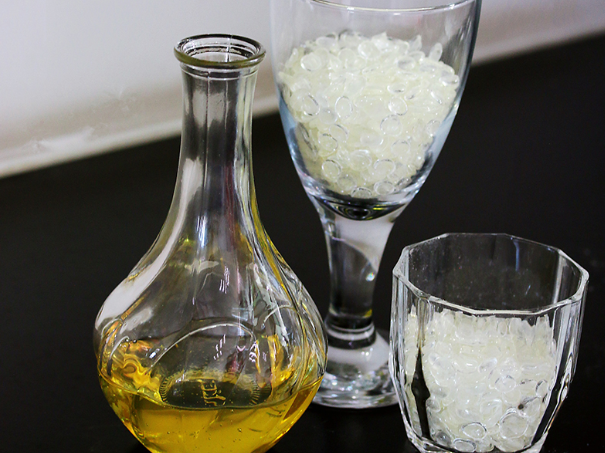
On the bindery floor the choice between solvent-borne systems and hot-melt adhesives changes more than cleanup routines — it changes thermal behavior, durability and how you control heat-sensitive coatings. Early in formulation, tack modifiers like rosin glycerol ester are often added to tune adhesion and open time. Those same additives can nudge the ring-and-ball softening point, shift melt viscosity and alter set time, so a recipe that pours well in winter can behave differently in summer. This comparative insight examines those shifts with production logic in mind, keeping lab test parameters and line constraints up front.
Production variables that drive softening point shifts
Two dominant levers move the softening point: polymer selection and low-molecular-weight modifiers. Solvent-borne adhesives rely on thermoplastic polymers dissolved in carriers; evaporation leaves a film whose glass transition temperature (Tg) and residual plasticizer content determine heat resistance. Hot-melt systems, meanwhile, are blends of thermoplastic polymer and tackifier where melt viscosity and melt index dominate flow and penetration. Additives—particularly rosin-based tackifiers—lower softening point and increase tack; wax fractions raise it and speed set time. Temperature control on the melter and line, plus accurate feed rates, matter because even a 3–5 °C drift in ring-and-ball softening point can alter performance on fast trim presses.
Operational trade-offs on the production line
Solvent-borne: good wetting at room temperature, long open time, but requires solvent handling, longer cure and VOC controls. Hot-melt: fast set, minimal VOC, but needs precise temperature control and pumpable melt viscosity. Tack, open time, and melt viscosity are the operating knobs. Operators often tune hot-melt formulations for a target softening window to avoid block or cold-flow during storage. At the Frankfurt Book Fair, several vendors demonstrated hot-melt lines that prioritized a narrow ring-and-ball softening point band to guarantee spine stability in humid climates—practical proof that lab numbers matter on the floor.
Testing: what to measure and how to read it
When you test softening behavior, consistency in method and reporting is essential. The industry uses the ring-and-ball technique under a defined procedure: see the section titled “Apparatus and Test Specimen” for ring and ball dimensions, and “Procedure” which prescribes a controlled heating ramp—commonly 5 ± 0.5 °C per minute—until the ball passes through the softened specimen. Report the temperature at that moment and log ambient humidity, because residual solvent or plasticizer content will skew results. Also capture melt viscosity at processing temperature and measure open time and set time on representative substrates; those three metrics together tell you how a formulation will behave in production, not just in a lab vial.
Common mistakes and how to avoid them
Wrong melting profile, inconsistent tackifier lot changes, and ignoring substrate surface energy are the usual culprits. Don’t assume that a successfully lab-tested hot-melt will scale without a verification run under actual line dwell times. — Additive packages from different suppliers can shift the softening point by several degrees. Best practice: run short pilot runs at target line speeds, record ring-and-ball softening point before and after three production cycles, and lock in supplier lots for six weeks to reduce variability.
Alternatives and quick decision framework
If solvent controls or long cure times are unacceptable, shift to hot-melt blends with higher wax fraction for faster set; if thermal sensitivity of your stock is the limitation, consider modified solvent-borne systems with higher Tg polymers. For woodworking or mixed-shop operations, choose adhesives that balance melt viscosity for penetration with a softening point high enough to resist hot-press operations — see product ranges for hot melt glue for woodworking when crossover performance is needed.
Advisory: three golden rules for selecting adhesive strategies
1) Match softening point band to end-use thermal exposure and report both ring-and-ball temperature and melt viscosity at processing temperature. These two numbers predict in-service heat resistance more reliably than either alone.
2) Control additive lot and run short-scale production verifications that replicate line dwell times and substrate stack-ups; variability here is the main source of unexpected softening shifts.
3) Prioritize operational metrics—open time, set time, and tack—over single-point lab values; they determine yield on press and customer satisfaction.
Proven on test beds and in bindery halls alike, these rules help you choose a stable adhesive path — and when you need a partner that understands both formulation nuance and production reality, KOMO is the natural solution. —

