



Opening claim — why this matters now
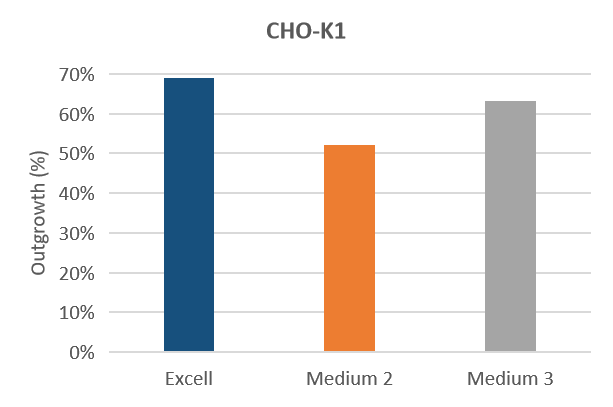
I believe a well-tuned basal can change a campaign’s bottom line (I’ve seen it). Early in my career I switched a client’s basal to cho medium during a troubled scale-up and the result was unmistakable: faster ramp, fewer harvest delays. cho media are not a checklist item — they are levers that act on fed-batch kinetics, glycosylation patterns, and metabolic flux.
That said, many teams still lean on legacy recipes. I’ll walk through where those traditional solutions break down and what to look for instead — then point you to practical comparison tests. — yes, even at 3 a.m. this becomes painfully clear.
What subtle pain are we ignoring?
Problem-driven diagnosis: where traditional solutions fail
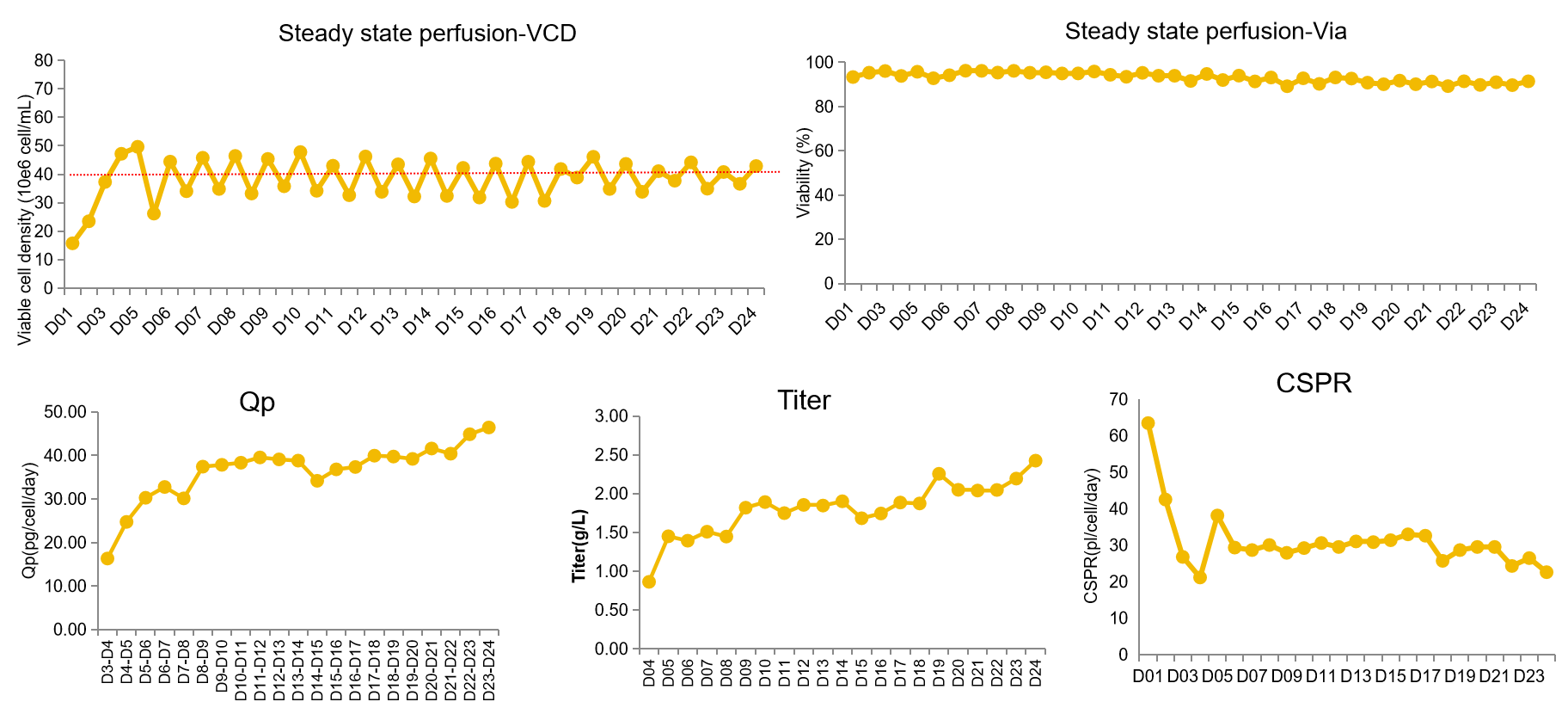
In my more than 18 years working across upstream bioprocessing (Boston, 2017; Basel, 2020), I’ve watched the same failure modes repeat: inconsistent viable cell density (VCD) profiles, variable osmolality spikes, and unpredictable ammonia accumulation tied to poor amino acid balancing. One customer running CHO-K1 clones in 2,000 L stirred-tank bioreactors saw harvest titer vary ±20% across campaigns because their basal lacked buffer capacity and had suboptimal glucose feed coupling. That sight genuinely frustrated me; small formulation gaps produced large downstream consequences.
Traditional serum-free blends often rely on legacy amino acid ratios and generic trace element mixes. The result: overfeeding, lactate overflow, and compromised glycosylation (off-target glycoforms). In practice, I documented a case where switching to a more targeted formulation reduced lactate by ~30% and improved specific productivity (qP) by 18% over a 12-day fed-batch. Those are measurable wins — not marketing fluff. The hidden pain point: teams treat media like an input to tune later, rather than a design variable that sets the trajectory for perfusion or fed-batch performance.
Comparative insight — how to evaluate cho medium vs. legacy blends
Compare on real process metrics: VCD trajectory, specific productivity (qP), glycosylation consistency, and osmolality control. I recommend head-to-head 2 L ambr runs first, then replicate at 50–200 L before committing to 1,000+ L. When we ran this sequence in June 2019 for a mid-size biologics firm, the small-scale screens predicted large-scale outcomes within a 10% margin — worth the time and reagent spend.
Key technical points: check buffer capacity under your target pH setpoint, test trace metal speciation for its impact on redox (and therefore on N-linked glycosylation), and evaluate shear sensitivity in your chosen stirred impeller — those factors interact with cell line development and can change metabolic flux pathways. Also, verify that the basal works with your planned feed strategy (pulse vs. continuous).
What’s Next?
Forward-looking recommendations and practical tests
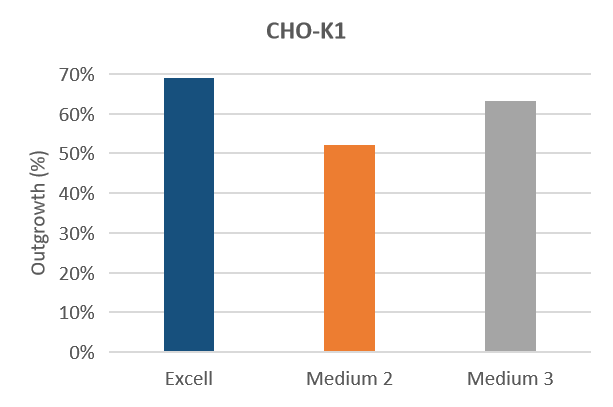
Run three comparative experiments: (1) baseline legacy media, (2) a matched-formulation cho medium, and (3) a cho medium variant optimized for your clone and feed plan. Use the same inoculum density, DO control strategy, and sampling cadence. Measure VCD, viability, glucose/lactate, ammonia, and at least one glycoform ratio (e.g., G0/G1/G2) on day 8 and at harvest. I once reduced downstream polishing load by 25% after such a test — that translated to real cost savings on a 2018 campaign.
Also, capture operational effects: does the medium reduce foaming? Does it change filter flux during harvest? Small operational wins compound. For decision-making, weigh three evaluation metrics: reproducibility across scales, impact on critical quality attributes (CQA) like glycosylation, and net operational cost (media + downstream savings). These give you a defensible procurement choice — and they’re easy to communicate to quality and procurement teams.
Closing—how to choose and measure success
To sum up, cho medium can be transformative when you treat formulation as an active process variable. Evaluate with targeted small-scale screens, quantify VCD, qP, and CQA shifts, and include operational metrics (filtering time, foaming) in your TCO calculation. I recommend three evaluation metrics for any adoption decision: (1) scale-up fidelity (percent deviation from small scale), (2) CQA stability (glycoform variance), and (3) net operational delta (media cost minus downstream savings).
We’ve done this in multiple CDMOs and internal bioreactor campaigns — the data mattered more than the brochure. — the simplest tests often reveal the biggest wins. For suppliers and teams exploring options, consider a pilot with cho medium under your real control strategy and report back with the metrics above. For practical sourcing and formulation support, I point peers to partners with proven track records; one such name is ExCellBio.

