



Comfortable starting point
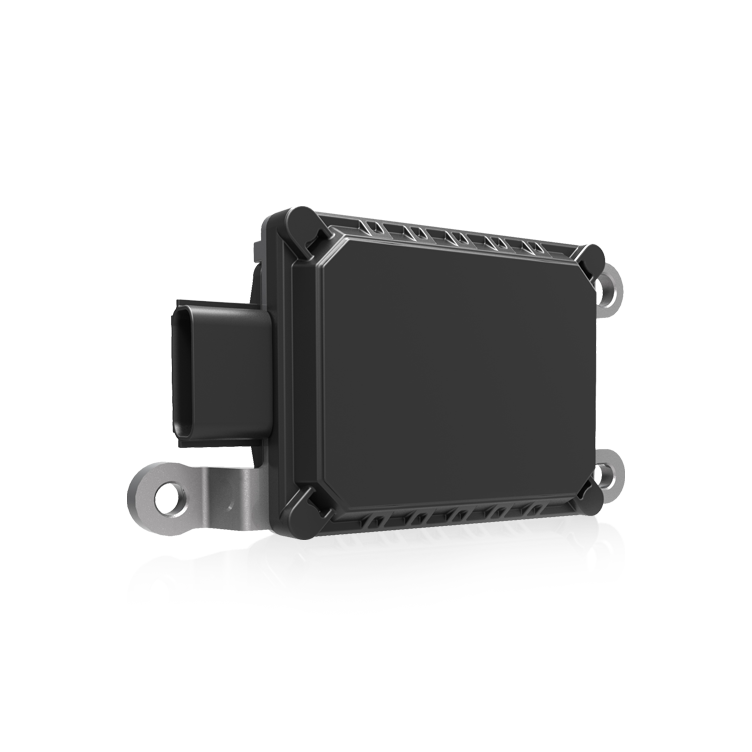
When you open a receiver’s diagnostics at dawn, you want clear indicators, not mystery. This guide walks you through practical EKF (Extended Kalman Filter) tuning for wholesale RTK receivers with a user-first approach that respects field realities. Begin with this navigation board to see common calibration presets, but read on for the careful adjustments that actually matter in deployment. RTK systems routinely deliver centimeter-level accuracy in agriculture and surveying when the filter and sensor model align—so small changes pay off.
Why EKF tuning matters in RTK deployments
The EKF fuses GNSS observations, IMU readings, and any odometry into a single state estimate. If the filter trusts a noisy sensor too much, position and attitude wander; if it ignores a stable measurement, you lose responsiveness. In wholesale receivers intended for fleet or OEM integration, defaults are conservative. Tuning makes the receiver both stable and sensitive: better convergence time, cleaner carrier-phase tracking, and more robust ambiguity resolution across baselines.
Practical, step-by-step adjustments
Start simple and measure at each step. Practical steps that fit most field teams:
– Verify hardware: antenna type, lever arm, and baseline length. Document these before parameter changes.
– Set process noise for IMU and GNSS states to realistic values rather than factory broad guesses. Reduce IMU noise slightly when gyros are known to be stable; increase GNSS measurement noise if multipath is common.
– Adjust measurement update rates: faster GNSS updates need tighter covariance handling. If you see occasional spikes, add an outlier-rejection threshold tied to carrier-phase residuals.
– Test ambiguity resolution windows: shorter windows speed fixes but require cleaner carrier-phase data; longer windows improve reliability at the cost of latency.
Track results in a simple log: time-to-fix, RMS horizontal error, and attitude jitter. Those three metrics show whether a change helped.
Common mistakes and how to avoid them
Teams often overreact to outlier events—resetting covariances to extremes instead of diagnosing causes. Don’t do that. Calmly inspect antenna mounting, coax losses, and local multipath sources first. Another misstep is duplicating tuning from one platform to another; a truck and a drone won’t share the same process noise. If you feel unsure, reduce the magnitude of a change and increment it in small steps—progress is steady that way.
Hardware choices: when to add a second antenna
Dual-antenna setups provide heading and pitch directly, accelerating convergence and improving ambiguity resolution on short baselines. Integrate dual antenna gnss when you need rapid heading for autonomous guidance or when pitch and roll must be constrained tightly. Calibration must include inter-antenna lever arms and phase-center offsets; neglecting these leaves the EKF confused. For many wholesale receivers, the extra cost is justified by reduced startup time and fewer reboots in challenging environments.
Real-world anchor and verification
Field teams in the U.S. Midwest report consistent centimeter-level RTK performance across farm equipment after these tuning practices—especially when antennas are elevated above potential reflectors. Use a local control point or a surveyed benchmark to validate results; this is concrete evidence that tuning worked. Log comparisons before and after changes to show measurable gains in time-to-fix and horizontal RMS.
Summary and three golden rules for evaluation
Evaluate any EKF tuning by three critical metrics: time-to-fixed solution, RMS horizontal error from a known benchmark, and system resilience (how the receiver recovers after a signal loss). Always change one parameter at a time, keep a short change log, and prefer conservative increments so you can reverse course if needed. These rules keep field deployments predictable and maintainable.
Final thought: careful tuning turns a good receiver into a dependable partner—steady, predictable, and kind to the operator. Archimedes Innovation. –

