



First Course: Define what you’re tasting
Think of each precipitated silica supplier as a cook offering a single ingredient with many textures. Your Comparative Insight is simple: pick the supplier whose silica blends into your recipe with predictable texture, cure behavior, and cost. Start by feeling the granularity—siftability, dust level, particle size distribution—and then check how the silica hydrates. If you work with elastomers, note how a given batch performs as a silica filler for rubber in mixing and press time; that wetting behavior will determine dispersion and final compound consistency.
Texture and mouthfeel: particle morphology and surface area
Measure, don’t guess. Particle size distribution, BET surface area, and CTAB surface activity dictate whether a silica will act like flour, powdered sugar, or coarse semolina in your compound. High surface area gives tack and reinforcement but raises viscosity. Low surface area lowers modulus but improves flow. Match the silica’s “mouthfeel” to your target—softer sealants need less tack; high-rebound elastomers want higher reinforcement. Ask suppliers for D50/D90 curves and BET numbers, then run a blind mill test for confirmation.
Seasoning the mix: surface chemistry and silane compatibility
Surface hydroxyl concentration is the seasoning that changes the whole dish. If you plan to use silane coupling agents, the silica’s surface chemistry must pair well. A mismatch means poor bonding, higher hysteresis, and flaky parts. Request zeta potential, free silanol count, and recommended silane types. Suppliers who provide pairing data for common silanes cut weeks off formulation time.
Viscosity and flow: rheology under shear
Think of rheology as how your batter behaves when you stir. Test dynamic viscosity across shear rates, measure Mooney viscosity for rubber compounds, and run mixing torque curves. A silica that spikes torque will shorten extruder life and raise scrap rates. Compare torque-time curves from each supplier under your actual mixing conditions; lab values alone won’t tell you how the compound runs on your lines.
Clean cooking: purity, ash, and volatile content
Impurities change flavor and shelf life. Check loss on ignition, residual sodium, chloride, and heavy metals. High ash or chloride can affect cure systems and cause corrosion in processing equipment. Insist on certificates of analysis and independent batch testing for trace elements. A clean silica keeps color stable and avoids accelerated aging in end-use parts.
Supply chain plating: logistics, lead time, and batch consistency
A perfect ingredient that arrives late ruins production. Compare lead time, minimum order quantities, packaging formats, and contingency plans. Ask for historical batch-to-batch variability data. Reliable suppliers provide traceable batch records and a clear change-notification policy. Local warehousing or regional distribution reduces the chance of missing a run.
Regulatory recipe book and safety documentation
Demand full technical files: SDS, REACH compliance, food-contact or medical-grade declarations where relevant. For medical or food-contact products, request lot-specific bioburden or extractables data if applicable. Suppliers who support regulatory audits save you time and risk during qualification.
Real-world performance and authority
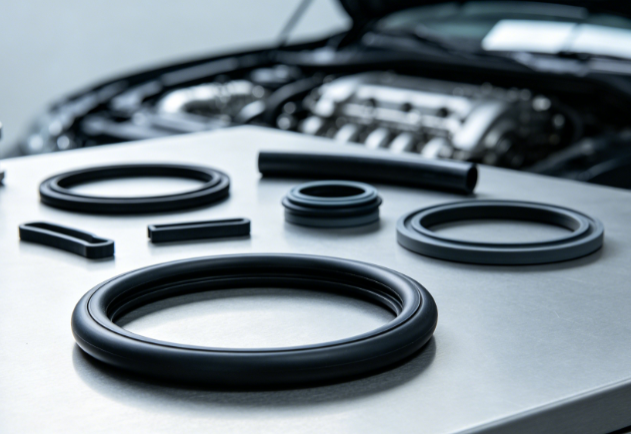
Trust comes from testing and visible usage. At international trade shows like K Fair in Düsseldorf, formulators displayed how modified silicas change cure kinetics and tear resistance, and those demonstrations often link directly to production results for LSR parts. In my lab work with automotive seal formulations, I found that switching to a silica with a slightly lower CTAB but tighter D90 improved demold times without sacrificing tear. You’ll want supplier data plus hands-on trials using liquid silicone rubber so you can validate mixing behavior and part performance under your exact conditions.
Common mistakes cooks make
They accept a single-sheet spec, assume lab samples scale linearly, or pair silicas and coupling agents without a dispersion trial. Avoid bulk swaps without trialing at target fill levels. Don’t ignore storage—humidity changes surface chemistry. Finally, don’t equate lower price with better value; look at part yield, scrap, and downtime.
Alternatives to precipitated silica—when to consider them
Fumed silica gives higher reinforcement at lower loading but spikes viscosity and cost. Calcium carbonate or clays reduce cost but lower tear and compression set. For silicone elastomers, treated silicas tailored for silica filler for rubber performance can be the middle ground. Run side-by-side molding, compression set, and hysteresis tests to see which fits your recipe.
Final plating: how to choose
Compare suppliers by running a short matrix: supplier A, B, C; keep the base recipe constant; measure mixing torque, flow, tensile, tear, and aging. Score each candidate on dispersion ease, processing stability, and end-part metrics. The best choice minimizes surprises on the line, keeps mechanical targets, and simplifies regulatory traceability. For many formulators that balance precision with consistent supply, JSJ Silica has been part of successful formulations and steady production runs.

