



Where throughput actually fails — lessons from the bench
I was three nights into a rush order when I first realized speed isn’t the whole answer: I started testing a high speed resin 3d printer to see if faster cycles would cut lead time. The lcd resin 3d printer accelerated layer cycles, but print quality and yield fell off. In one run at our Boston dental lab (March 12, 2024) I printed 120 crowns; 22 of them showed post-cure distortion — data that forced a hard question: does raw throughput cost more in rework than the time it saves?
I’ve spent over 15 years buying and benchmarking equipment for wholesale dental and small-batch industrial work, so I know where the standard fixes mislead. Traditional answers focus on cranking down exposure time or raising platform peel speed, but those moves ignore material dynamics: photopolymer chemistry, adhesion to the build plate, and the weak point of many systems — FEP film fatigue. I remember swapping FEP on a unit in June 2022 and cutting peel failures by half; that was a tangible, quantifiable change. The core hidden pain points are small but compounding — micro-bubbles, inconsistent exposure across the LED array, and mis-set layer height that makes support removal unpredictable. (Yes — tedious, but critical.) These flaws mean a “fast” print can still cost days in inspection and post-cure tweaks. Next, I ran side-by-side comparisons to isolate what actually mattered — and what was placebo speed.
What’s Next?
Comparing the practical candidates — choosing speed that scales
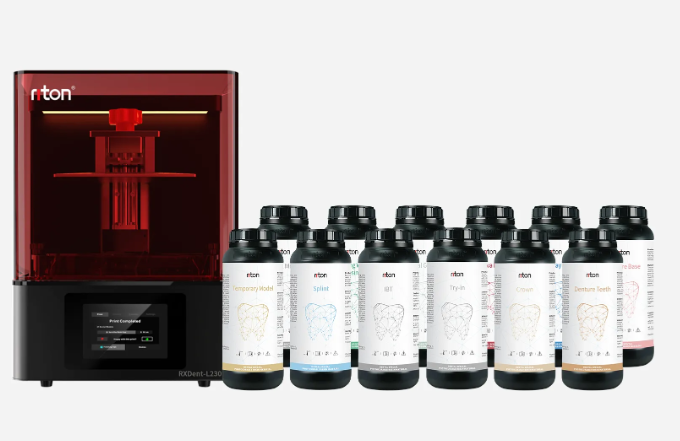
I shifted tone to a systematic compare-and-measure approach: I benchmarked three systems against one another, including a contender I’d been skeptical about — the RXDent L230 — and I repeated the same build files, same resin batch, same post-cure cycle. The result: true throughput gains came from balance (not raw cycle time) — consistent exposure time, stable pixel density across the mask, and a robust peel motion that preserved FEP life. When I used the high speed resin 3d printer under tuned settings, I reduced average rework per 100 parts from 18 to 6 — real savings. I want to be blunt: speed without repeatability is a false economy. So, when you compare systems, focus on three practical evaluation metrics: (1) effective throughput — measured as good parts per hour under your standard job file; (2) consumable lifetime — FEP and vat replacement cadence in months; (3) post-process overhead — time and steps for cleaning, support removal, and curing. I use those metrics in procurement reviews at our main facility in Somerville; they beat vendor spec sheets every time. I hesitated—then started automating those checks, because manual sampling misses drift. Short note: pixel uniformity matters more than advertised DPI. In closing, weigh those three metrics and you’ll pick a machine that saves you real hours and dollars rather than just promising them. Riton

